Normally, my role at this time of year is to provide you the State of IAPMO — a look at how our association is performing and where we are headed. But as I reflected on the past year, our centennial and what we experienced together at this year’s Annual Education and Business Conference, I thought it was important to step back and look at how we got here.
What a year it has been.
More than 600 people came together in Los Angeles for what became a record-setting conference. We welcomed participants from 40 states and from countries including India, Australia, Indonesia, Taiwan and across Europe. Many traveled thousands of miles to celebrate IAPMO’s 100th anniversary with us.
That global representation was particularly meaningful because it reflected just how far IAPMO has come since 39 Los Angeles plumbing inspectors gathered in 1926 to address a rapidly growing city and the public-health challenges that accompanied that growth.
Los Angeles was changing dramatically at the time. Hollywood was emerging, the California oil boom was underway, the Port of Los Angeles was being developed, and the city was approaching 1 million residents. Construction was moving faster than the ability of local officials to keep up with inspections and requirements.
There was no comprehensive plumbing code. There were no product testing and certification programs. There were only a collection of local ordinances addressing such things as materials, piping and basic construction requirements.
Those 39 inspectors, led by founding father Stephen Smoot, recognized the need to bring their knowledge together. They began sharing what they were learning and developing requirements that could provide greater consistency and, ultimately, better protection for public health and safety.
That spirit remains at the heart of IAPMO today.
We have grown considerably since those early days. In 1996, IAPMO had approximately 2,000 members, 20 employees and about $2 million in revenue. Today, we have more than 6,000 members, more than 400 employees and are on track to exceed $110 million in annual revenue.
But growth is not our objective by itself. Our responsibility is to take the resources generated by that growth and reinvest them in the industry and in the communities we serve.
This year, for example, we are investing more than $40 million in our laboratories, facilities, technology and other capabilities. We are expanding capacity, developing new testing services and making investments that help us meet the evolving needs of our clients and members.
Several areas of our business are experiencing particularly strong growth. Our New Jersey laboratory is performing well ahead of expectations. Our Systems Certification Body business continues to expand. International laboratory testing is growing, as are our electrical, gas and solar programs and our water systems certification activities.
At the same time, our traditional businesses — codes, standards, training, education, testing and certification — remain strong.
That diversification is important because it makes IAPMO stronger and better positioned to serve the industry in the future.
Our international reach also continues to expand. This year we added offices in Ireland, the United Kingdom and Germany, bringing IAPMO to 16 offices around the world, with employees in 24 states and 12 countries.
Our new relationship with In-Compliance, led by Jutta Emge-Degenhardt, gives IAPMO additional expertise to help manufacturers navigate compliance and market-access requirements in Europe and around the world. It is another example of how we are adapting our services to an increasingly global marketplace.
And our international work goes well beyond business.
In Rwanda, we are working with the Rwanda Plumbing Organization and other partners to develop a national plumbing code based on the Uniform Plumbing Code® and adapted to local needs. In Kenya, ARCSA International and IAPMO are supporting the adaptation of rainwater-harvesting standards to provide potable water in communities that need reliable off-grid systems. In Zambia and Nepal, we are working with local organizations to develop plumbing codes and strengthen skilled-workforce development.
These efforts demonstrate something fundamental about IAPMO: Our codes, standards, training, education and technology can be used not only to serve established markets, but also to help communities build safer, healthier infrastructure.
That philosophy is especially evident through the International Water, Sanitation and Hygiene Foundation (IWSH). Our work at the Los Angeles Mission is a perfect example.
In our centennial year, it is particularly meaningful to give back in the community where IAPMO was born. Contractors, UA locals, manufacturers and other industry partners have come together to improve plumbing and sanitation facilities at the Mission, which each day serves thousands of people experiencing homelessness.
The project is expected to save hundreds of thousands of gallons of water annually while helping expand access to showers, hygiene and dignity. And because IAPMO covers the administrative and staff costs associated with IWSH projects, donations can go directly toward the work itself.
One final IWSH initiative that is particularly near and dear to my heart is the work being done by our Conference Planning and Special Projects Committee to give back to the communities where we gather. More than two years ago, the committee, then chaired by Lorena Panelli, began working with local shelters and facilities to provide hygiene products in conjunction with IAPMO board meetings and conferences. Since then, the initiative has grown to seven projects, and during this year’s conference in Los Angeles, committee members and other conference companions came together to assemble 1,000 hygiene kits — approximately $18,000 worth of products — for the Los Angeles Mission.
These kits are provided directly to people who come to the Mission for showers or as they enter its programs, providing essential personal-care products at a time when they are needed most. I am especially proud of this initiative, and grateful to the committee and our companions for continuing to find meaningful ways for IAPMO to give back.
As proud as I am of our growth and expanding reach, I am equally proud of the foundation beneath it.
We are financially strong. We have approximately six months of operating capital in reserve, and our reserves have reached an all-time high. Since 2021, our revenue has increased by roughly 86 percent, while reserves have grown by approximately 76 percent.
That stability matters because we cannot know what challenges the next decade, much less the next century, will bring. IAPMO has already weathered economic crises, wars, recessions, technological change and a global pandemic. Each time, we adapted. Today, we are in a strong position to do it again.
A century ago, 39 people gathered in Los Angeles because they believed they could make their community safer by sharing knowledge and working together. One hundred years later, IAPMO’s services reach more than one-third of the world’s population. That is an extraordinary journey, but it is not the end of the story.
Our centennial has given us an opportunity to celebrate where we came from. More importantly, it has challenged us to think about where we are going. The next 100 years will bring new technologies, new environmental challenges, new workforce needs and new demands on the systems that protect public health.
We will meet those challenges the same way our founders met theirs: by bringing people together, sharing knowledge, developing practical solutions and keeping public health and safety at the center of everything we do.
IAPMO is stronger than it has ever been. We have the people, the partnerships, the resources and the global reach to make an even greater impact.
The first 100 years built the foundation. Now, together, we get to build what comes next.
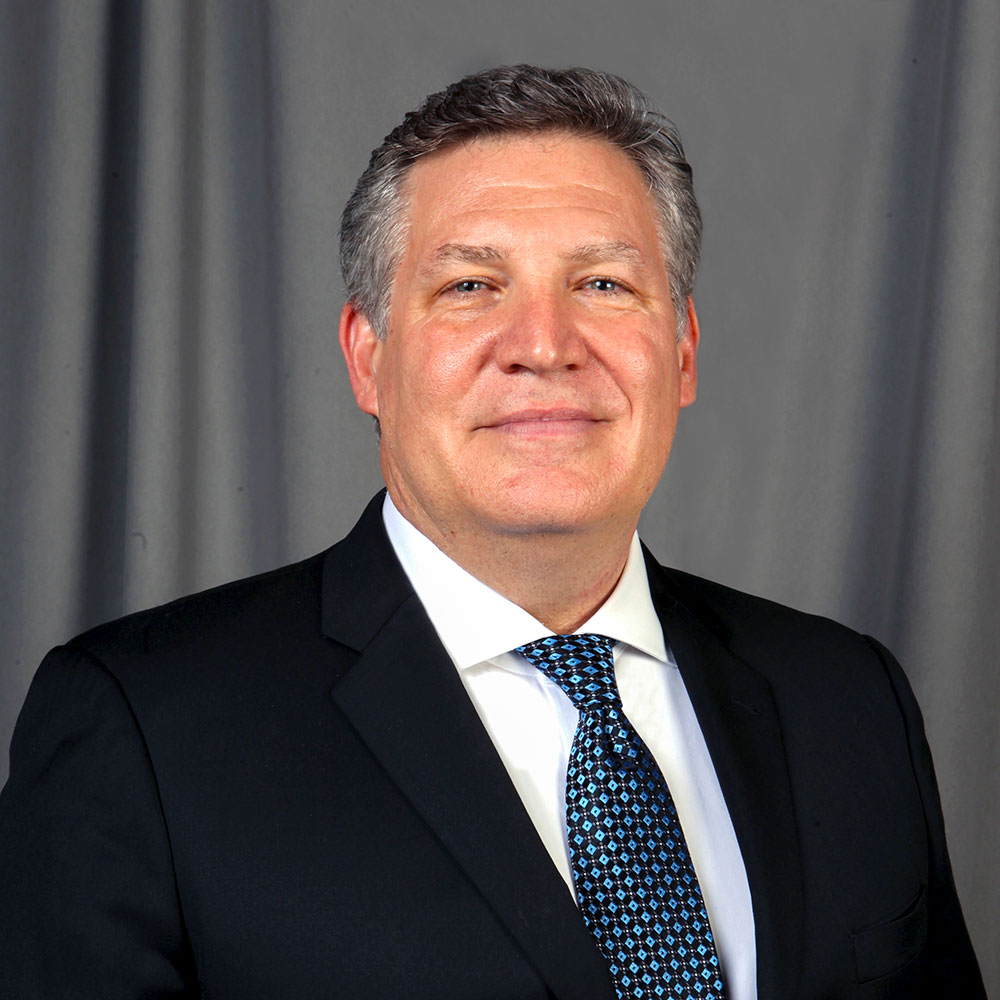
Dave Viola
Dave Viola is the CEO of The IAPMO Group, a global non-profit membership-based organization focused on the development of codes that govern plumbing quality standards. He has more than 25 years of senior management experience within the plumbing and mechanical industry. He joined IAPMO in 2007 and, served as IAPMO’s chief operating officer with strategic and operational responsibility for the comprehensive array of IAPMO Group programs and services. Dave also serves as Deputy Chairman of the World Plumbing Council. Dave previously worked as Technical Director for the Plumbing Manufacturers Institute (PMI) from 1998 until 2007. He serves or has served on many industry committees and boards in the United States and Canada, including AWE, ASME, ANSI and ASHRAE.
Last modified: November 13, 2026