
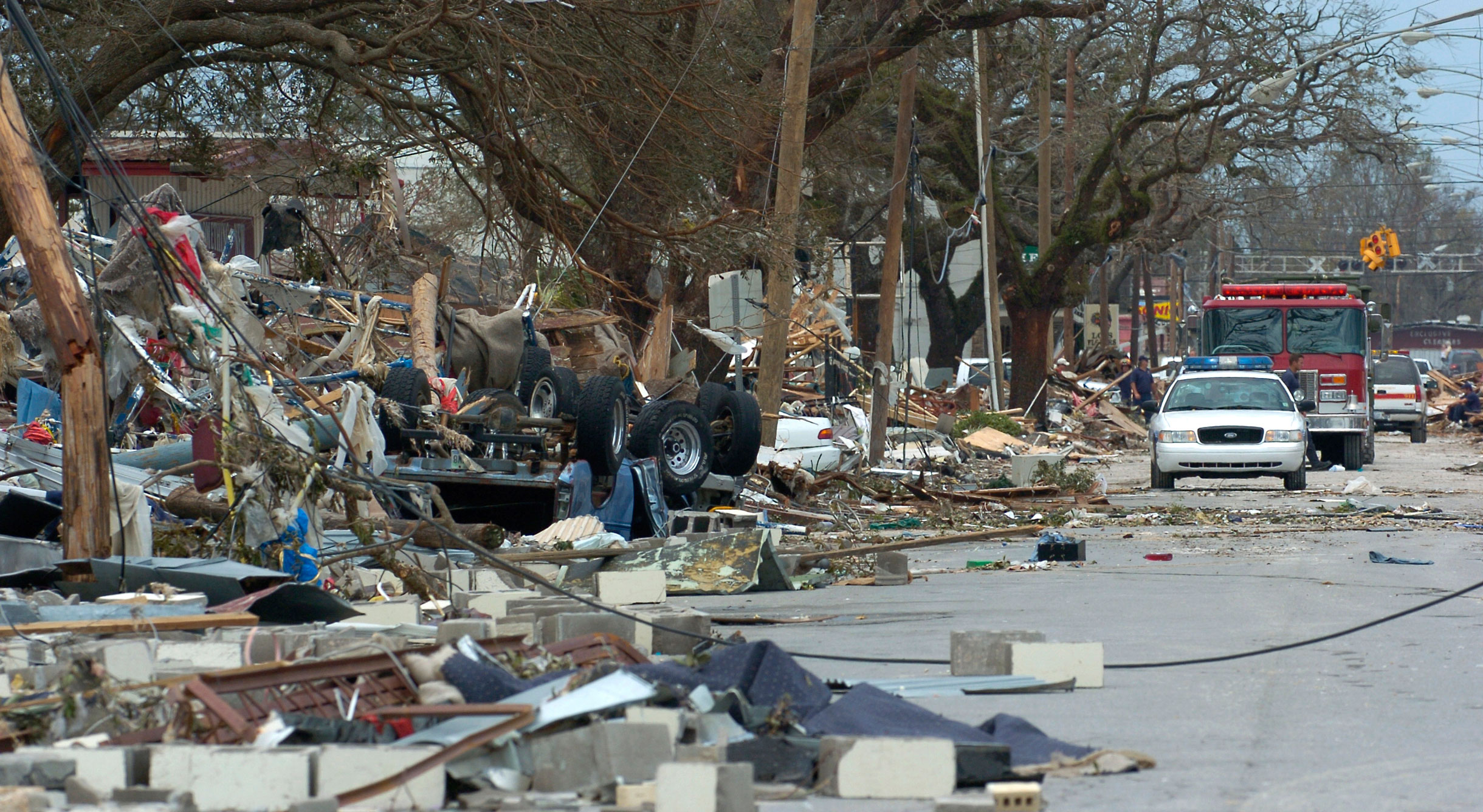
When hurricanes hit the Southeast, they don’t just damage homes and roads — they often also knock out water systems.
In the days and weeks after such events, homeowners may be advised to avoid drinking tap water, treatment plants may be overwhelmed, and infrastructure may be offline for days. For Dr. Tamim Younos, president of the Green Water-Infrastructure Academy and a former member of ARCSA International’s Education and Research Council, the key to future resilience lies in decentralized systems, smarter filtration strategies, and greater public awareness.
Millions Left Vulnerable
Younos draws a clear distinction between centralized and decentralized systems. Centralized systems rely on transporting large volumes of water across long distances — often from rivers, lakes, or reservoirs — using energy-intensive infrastructure.
“In centralized systems,” he said, “about two-thirds of the energy is used to transport the water from the source and water treatment plant to a city. And even if there’s no breakdown, about 20-25% of treated water is lost during the transportation.”
In disaster scenarios, these systems become particularly fragile. Flooded pipelines can carry contamination. Power outages shut down pumps. And when key infrastructure is affected, millions can be left without clean water.
More Resilient Alternative
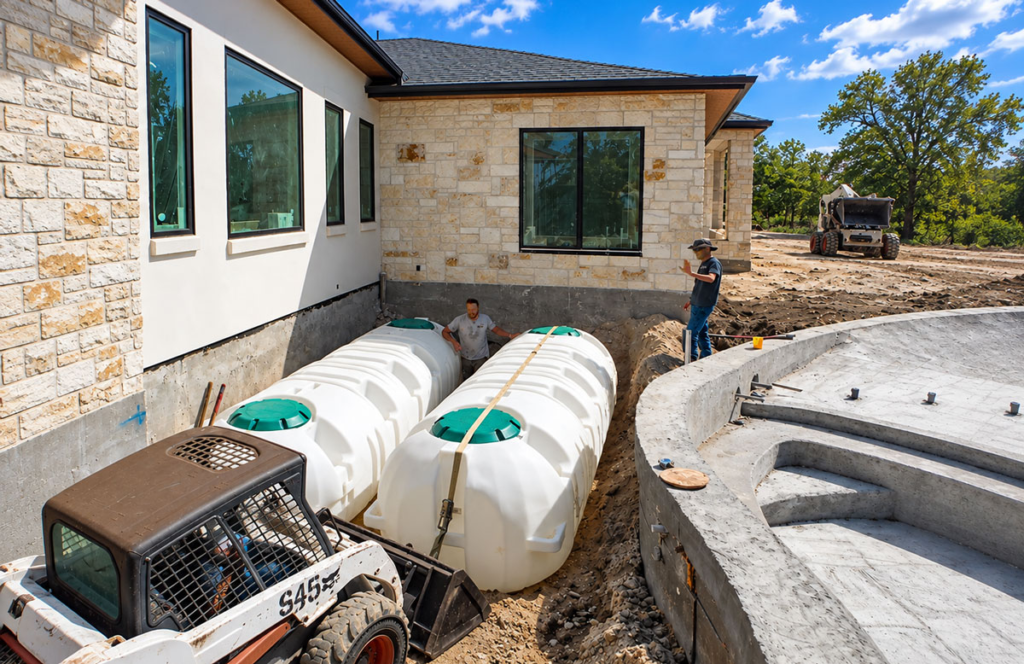
Decentralized systems, by contrast, focus on using water sources that are available locally — such as rainwater from rooftops or stormwater from surrounding areas. These systems treat water closer to the point of use, which reduces transmission water losses and increases energy use efficiency.
“Not all communities are usually impacted by a disaster,” Younos said. “But centralized systems serve large areas, so if something happens, millions of people are affected.”
Smaller, local systems are also less vulnerable to cyberattacks.
“Cyberattacks can target large water systems,” he noted. “They don’t usually hack small ones.”
After a Storm
When a hurricane hits, potable water systems may stop functioning altogether — usually not because they’re damaged, but because they’re powered down.
“Since potable water supplies are energy dependent,” Younos said, “if the pumping system shuts down, you don’t get any water. A lot of places don’t have backup energy systems.”
Even when water is flowing, it may not be safe. He described a situation in his own community in Virginia, where a flood contaminated the water supply.
“We were advised not to drink the water. It took more than a week,” he said. “We had to depend on bottled water.”
What Plumbers Can Do
In the immediate aftermath of a disaster, there’s little plumbers can do until floodwaters recede.
“If a pipeline is flooded, it’s kind of difficult to do anything about it. You have to wait for hours, if not days,” Younos said.
Once the water subsides, however, plumbers are essential in restoring access and ensuring water quality. Younos recommends that plumbing professionals become familiar with small-scale water treatment systems and backup power solutions, which can be deployed quickly and integrated into rebuilt homes.
“They should have knowledge of very small treatment systems, which could be portable, and they can bring to the community pretty fast,” he said. “There definitely should be a small backup drinking water system — and also a backup of energy, a generator, to run it.”
A Simple First Step
While reverse osmosis and whole-house filtration systems are valuable in some cases, Younos said the priority should be ensuring that drinking water is safe at the tap. Many people already use a simple carbon filter or a built-in refrigerator filter, and he encourages that trend.
“In most houses nowadays — and in my house — we have a water filter for drinking purposes,” he said. “There always should be emergency filtering systems.”
He noted that point-of-use filters offer a manageable, low-maintenance option for many homeowners. But shared filtration systems may be even more effective in a disaster response context.
“If there’s sharing — a cooperative of these things — it’s easier to get cleaner water sooner,” he said. “Otherwise, you have to wait.”
RO and the WaterSense Spec
The EPA’s new WaterSense specification for point-of-use reverse osmosis (RO) systems has Younos’ support. RO was originally developed for desalination, but it’s now widely used at water treatment plants for filtering out salts, metals, and emerging contaminants.
“It’s a very fine filter,” he said. “That fine filter removes a lot of contaminants. It could be effective for salts and other contaminants as well.”
He also sees a role for RO systems in decentralized applications.
“I think there could be smaller scales of reverse osmosis systems that should be used in conjunction with decentralized systems if you’re using rainwater or stormwater,” he said.
He added that disinfection remains an important step in the treatment process.
“Disinfection could be used — chlorination or UV, or some other system. It depends on what kind of system it is,” he said.
Why Rainwater Reuse Matters
Younos noted that a significant amount of water used in buildings is for non-drinking purposes, which presents an opportunity for rainwater reuse.
“Two-thirds of the water is used for non-drinking purposes — flushing toilets, lawn irrigation,” Younos said. “We could use rainwater or stormwater for that. I call it wasted water.”
He said water systems should be considered during the building design phase to avoid unnecessary costs later.
“When we build a new building, why not think about an innovative water system?” he asked. “If you don’t do that, retrofitting is going to cost money. Permitting, zoning — everything should consider water.”
Barriers to Decentralized Systems
Despite the potential, decentralized systems are still a tough sell in many communities.
“If something goes wrong, it could be costly because of a lack of a cost-effective maintenance system,” Younos said. “That’s probably a major reason a lot of places don’t want to implement decentralized systems.”
Public perception also plays a role. People are often uncomfortable with water reuse — even when they already rely on it.
“If we take the water from a river, and that river also received treated wastewater, then our river water is recycled water,” he said. “People don’t know that.”
Younos believes the solution lies in education and collaboration.
“We need cross-disciplinary teams to bring new ideas and make them happen,” he said.
Lessons from the Field
Younos’ own work in Southwest Virginia and the Florida Keys has shown how much progress can be made with decentralized water systems — even in small or off-grid communities.
In Virginia, he worked with mountaintop homes that relied on rainwater catchment.
“They collect rainwater, and they do disinfect the water,” he said. “We helped them think about disinfection and maintenance.”
In the Keys, he collaborated on a project where a home had its own water treatment system. “It was useful,” he said. “If a storm hits, such systems can provide safe water to a number of households.”
Long Road Ahead
While hopeful decentralized systems will become more popular in the United States, Younos said work remains to be done.
“Out-of-the-box thinking, changing people’s perception and teaching it more in the colleges,” he said, “because right now we are having like the 20th-century technologies in college and water systems, and those graduates go to city planning and those things.”
He also supports public-private partnerships to fund decentralized systems.
“I’m promoting a cooperative approach, like if you have a town or city each building has a rainwater system or something for water reuse,” he said. “The people put the resources together. If something happens, they can use their investment to fix the system. For an individual household, it could be costly.”
ARCSA’s Role
Younos served on ARCSA International’s Board of Directors and was on the organization’s Research and Education Council from 2017 to 2025. He became involved with the association after years of promoting rainwater reuse in Virginia and connecting with fellow advocates like David Crawford, an ARCSA past president.
“I went to the Virginia Legislature to talk about the potential of rainwater harvesting,” he recalled. “I worked with David Crawford, and eventually he invited me to be on the ARCSA board.”
ARCSA provides nationally recognized design standards — ARCSA/ASPE/ANSI 63: Rainwater Catchment Systems and ARCSA/ASPE/ANSI 78: Stormwater Harvesting Systems — for system designers, installers and inspectors. These standards, along with ARCSA’s professional certification programs, help ensure the development of safe, replicable potable water systems. They are also applicable to non-potable systems, which, if designed correctly, can provide critical water supplies in disaster situations.
As communities rebuild after disasters and seek more resilient systems, Younos stressed that decentralized water strategies are not a solo effort.
“We need cross-disciplinary teams to bring new ideas and make them happen,” he said. “Plumbing is part of that system.”
Mike Flenniken
Mike Flenniken is a staff writer, Marketing and Communications, for IAPMO. Prior to joining IAPMO in 2010, Flenniken worked in public relations for a group of Southern California hospitals and as a journalist in writing and editing capacities for various Southern California daily newspapers.
Last modified: November 18, 2026