
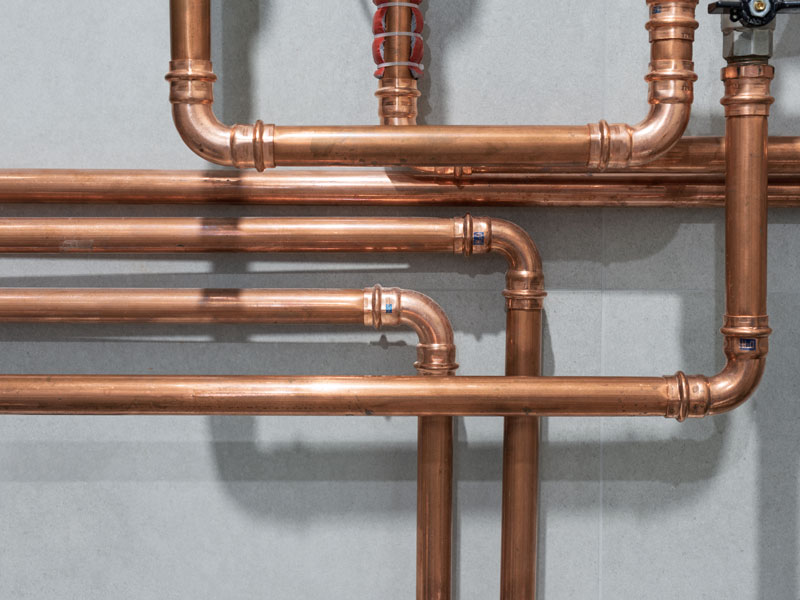
There is a version of building water safety that looks good on paper. The water management plan is in the binder. The flushing log has dates in it. The temperature checks show numbers in the right range. And then a patient contracts Legionnaires’ disease, or an inspector flags chronic positivity in a building that has been treated for years, and the investigation leads back to something that should have been caught much earlier: a recirculation loop that was never actually balanced; a branch that modeled as in-spec but in practice sees almost no flow; a pipe segment that tested at 120 degrees Fahrenheit at the return but drops well below that threshold by the time water reaches the fixture.
The gap between what a system is designed to do and what it actually does in operation is one of the most persistent and underappreciated challenges in building water safety. Closing that gap requires something that codes and guidance documents alone cannot supply: field competency. Specifically, the ability to measure what is actually happening inside a building water system, interpret those measurements against water quality risk thresholds, and communicate findings in terms that translate into action.
This article is about that competency: what it looks like, why it matters, which tools support it, and where the profession currently falls short. It is directed primarily at plumbing contractors, installers, and the authorities having jurisdiction (AHJs) and inspectors who evaluate their work, because these are the practitioners whose hands are closest to the pipe and whose decisions most directly determine whether a building water system enters service in a safe condition.
The Problem with Proxies: Why Verification Matters
Most building water safety programs rely heavily on proxies. Temperature is used as a proxy for microbial control, on the reasonable assumption that water maintained above 120 degrees Fahrenheit in hot water systems and below 68 degrees Fahrenheit in cold water systems is unlikely to support meaningful Legionella growth. Disinfectant residual is used as a proxy for system integrity, on the assumption that measurable free chlorine or other residual throughout the distribution system indicates effective protection. Flushing logs are used as a proxy for flow, on the assumption that opening a fixture for a defined period of time results in meaningful water exchange.
Proxies are useful. They are also incomplete.
Temperature at a return sensor tells you what is happening at that sensor. It does not tell you what is happening at a fixture 40 feet away at the end of a branch that may see only intermittent use. Disinfectant residual at a sample point reflects conditions at that point at the time of sampling; a dead leg a few feet away may have been effectively cut off from the treated water supply. A flushing log records that a fixture was opened; it does not record whether adequate flow actually occurred, or whether the water that appeared at the outlet had been sitting in a section of non-recirculating pipe for days.
This is not a criticism of the practitioners who rely on these tools. It is a structural observation about where the field has been operating and where it needs to go. The trajectory of building water safety regulation is unmistakable: requirements are becoming more specific, enforcement is becoming more rigorous, and the standard of care that courts and licensing boards apply to engineers, contractors, and inspectors is rising. Operating from proxies alone is increasingly insufficient, particularly on projects involving healthcare facilities, senior living, or any building serving populations with elevated susceptibility to waterborne infection.
What is needed, and what this article is intended to illuminate, is a set of field skills and measurement tools that allow practitioners to verify system behavior directly rather than infer it from indirect indicators.
Flow: The Variable That Determines Everything Else
Of all the physical parameters that govern water quality in a building system, flow is the most fundamental. Stagnation is the precondition for virtually every pathogen amplification scenario in premise plumbing. Disinfectant residual decays in stagnant water. Temperature rises toward the Legionella growth range in cold lines that are not moving and falls below effective bactericidal thresholds in hot lines that are not recirculating. Biofilm forms and thickens in areas of low or no flow and provides a protected environment that treatment chemicals cannot reliably penetrate.
Despite its central importance, flow is also the parameter that is most rarely measured directly in the field. Most building water system assessments estimate flow based on design documents, fixture counts, or hydraulic models rather than actual measurement. Design documents describe what a system was intended to do; they do not describe what it is doing after years of operation, modifications, valve adjustments, and shifts in occupancy patterns. Hydraulic models are approximations. Neither is a substitute for knowing the actual flow rate in the pipe.
Ultrasonic flow meters have changed what is practically achievable in field flow measurement. A clamp-on ultrasonic meter can be placed on the outside of an existing pipe, without cutting into the system, without disrupting service, and without the installation of permanent hardware. By transmitting ultrasonic pulses through the pipe wall and measuring the transit time differential between upstream and downstream signals, the instrument calculates flow velocity and, given the known pipe geometry, volumetric flow rate.
For the building water safety practitioner, the implications are significant. A clamp-on ultrasonic meter placed on a hot water recirculation branch can confirm whether that branch is receiving meaningful return flow or whether it has effectively become a dead leg. Placed on a supply main, it can verify whether the system is operating within the flow range assumed by the water management plan’s flushing protocols. Placed on a cold water line serving a low-use wing, it can document the degree of stagnation that exists between flushing events.
Using these instruments effectively requires more than purchasing the equipment. It requires understanding the acoustic properties of the pipe material and wall thickness, the effect of pipe geometry and fittings on measurement accuracy, and the relationship between velocity profile and volumetric flow at different Reynolds numbers. It also requires the ability to interpret results in the context of water quality risk: knowing not just what the flow rate is, but what it means for disinfectant decay, temperature maintenance, and the likelihood of microbial amplification in that section of the system.
This is a learnable skill set. It is also one that is currently underrepresented in the training backgrounds of most plumbing contractors, installers, and inspectors working in this space.
Temperature: Measuring What You Cannot Always See
Temperature is the most commonly measured parameter in building water safety programs, and it is also among the most frequently misapplied. The problem is not that practitioners do not take temperature readings; it is that the readings they take often do not capture the temperature conditions that matter most for pathogen control.
A return temperature measurement at a recirculation pump tells you the temperature of the water returning from the system. It does not tell you the temperature at any specific fixture branch, particularly one served by a long, infrequently used lateral. A point-of-use measurement taken immediately after the fixture is opened gives the temperature of water that was sitting in the outlet fitting and the last few feet of branch piping, not the water that has been sitting in the main branch for the past 18 hours. These distinctions matter, because Legionella amplification occurs at temperatures between 68 and 113 degrees Fahrenheit, and portions of a system that consistently fall in that range are at risk even if every sensor-based measurement in the water management plan shows acceptable values.
Thermal imaging and precision temperature profiling tools allow practitioners to map temperature distribution across a system in ways that point sensors cannot. Infrared thermography applied to exposed pipe runs can identify sections where temperatures have drifted out of range without requiring access to the water itself. Portable precision thermometers with data logging capability allow sustained monitoring at specific points to capture diurnal temperature variation rather than a single snapshot. When these tools are paired with flow data, the picture becomes considerably more complete: low-flow zones with elevated temperatures in a hot water system, or low-flow zones with depressed temperatures in a cold water system, are exactly the areas where risk is highest and where targeted remediation should be directed.
Temperature profiling also has an important role in commissioning new systems. The IAPMO Manual of Recommended Construction Practices for Potable Water establishes clear requirements for construction-phase water management, including flushing protocols and pre-occupancy disinfection. Verifying that those protocols actually achieved the intended result, that the system is operating within design temperature parameters throughout, requires measurement beyond what a standard commissioning checklist provides. Thermal mapping at or near occupancy is one of the most direct ways to confirm that a new system is behaving as designed before patients, residents, or building occupants are relying on it.
Hydraulic Calculations: From Rule of Thumb to Verified Design
Pipe sizing and hydraulic calculations occupy an uncomfortable position in the current practice of many plumbing contractors and installers. The calculations exist — they are required by code in most jurisdictions — and they are routinely performed, or at least signed off on, by the engineers of record who seal the construction documents. In practice, however, the survey data from the 2025 Association of Water Technologies Annual Conference are instructive: only 43% of responding licensed engineers reported using hydraulic calculations rather than rule-of-thumb design in the majority of their projects. Among contractors and installers who are not engineers, the picture is often worse.
This matters for water quality in ways that are not always obvious. Oversized piping is one of the most reliably documented contributors to Legionella risk in premise plumbing. When pipes are sized using conservative fixture unit methods that significantly overpredict demand, the result is a system with large volumes of water that turns over slowly, long residence times that promote disinfectant decay and temperature drift, and an effective pipe surface area far in excess of what the actual flow can maintain in a biofilm-resistant state. The IAPMO Water Demand Calculator was developed specifically to address this problem in residential and multi-family applications, using empirically validated demand data to produce more accurate sizing that reflects how modern, low-flow fixtures actually perform. Proper application of this tool, and its equivalents for commercial and institutional occupancies, is a skill that translates directly into safer buildings.
For contractors and installers, building fluency with hydraulic concepts, such as pressure loss calculations, recirculation pump sizing, balancing valve selection, and the relationship between pipe diameter and flow velocity, creates the ability to identify potential problems in a design before they become problems in an occupied building. It also creates the ability to have informed conversations with engineers of record when a design element raises a concern, and to document those conversations in ways that protect both parties if a water quality issue later emerges.
For inspectors and AHJs, understanding the hydraulic basis of a submitted design is increasingly necessary to evaluate whether that design adequately addresses waterborne pathogen risk. A plan review that confirms code compliance with respect to fixture counts and minimum pipe sizes does not, by itself, identify a recirculation system that will fail to maintain adequate return temperatures, or a pressure zoning configuration that will create operational dead legs on two floors of a seven-story building. Recognizing those conditions requires hydraulic literacy that goes beyond the prescriptive checklist.
Water Quality Sampling: Collecting Samples That Actually Mean Something
Water quality sampling is a core element of virtually every building water management program, and it is also one of the most variably executed. The results of a sampling program are only as meaningful as the samples themselves, and collecting samples that accurately represent conditions at a point of use, in a branch, or in a storage vessel requires a level of procedural precision that is not always present in field practice.
First-draw samples, intended to capture the water that has been sitting at the point of use, must be collected before any flushing occurs. If a housekeeper or facilities staff member ran the faucet before the sample was collected, the result reflects conditions in the supply main rather than conditions at the outlet, which defeats the purpose of the sample. Flush samples, intended to characterize bulk system water, require a defined and documented flush volume before collection, not an arbitrary duration. Samples collected for Legionella culture require specific volume (typically one liter), container type, neutralizing agent to stop residual disinfectant activity, and cold chain maintenance during transport; deviations at any of these steps can produce false negatives that lead to unwarranted reassurance about a system that is actually colonized.
Equally important is the ability to interpret results in context. A single non-detect result does not mean a system is free of Legionella; it means Legionella was not detected at that sample point at that time. Understanding what level of sampling provides a meaningful picture of system-wide conditions, and how to interpret patterns of positivity across multiple sample points and time periods, is a skill that requires training rather than intuition. The relationship between quantitative culture results (colony-forming units per milliliter), semi-quantitative results (positive or negative at a given detection threshold), and actual exposure risk involves microbiological and epidemiological concepts that are not part of most plumbing training curricula.
Reading Construction Documents: A Skill with Water Quality Implications
There is a practical skill that sits at the intersection of all of the above and that is frequently overlooked in discussions of building water safety competency: the ability to read and interpret construction documents with a water quality focus.
A set of plumbing construction documents contains, or should contain, the information needed to evaluate the system’s hydraulic behavior, identify potential stagnation zones, understand the recirculation design intent, and locate the flushing points specified for commissioning. In practice, that information is often incomplete, inconsistently presented, or distributed across multiple drawing sets in ways that make it difficult to assemble a coherent picture of how the system will actually function.
For plumbing contractors and installers, the ability to read construction documents with a critical eye toward water quality, specifically asking questions about dead legs, recirculation coverage, pressure zone transitions, and the adequacy of specified flushing protocols, is an increasingly important part of the job. Identifying a potential problem during plan review or rough-in is far less expensive, and far less legally exposed, than identifying it after a building has been occupied for three years.
For AHJs and inspectors, the same ability applied during plan review creates an opportunity to catch design-level water quality risks before they are built in.
This skill is learnable. It requires familiarity with plumbing drawing conventions, an understanding of which design elements are most strongly correlated with water quality risk, and practice reading actual project documents with these questions in mind. It is not, at present, a standard component of plumbing apprenticeship programs, continuing education requirements for contractors, or inspector training curricula in most jurisdictions.
Where ESPRI Fits: Technical Depth When the Stakes Are High
The skills described in this article can be developed through a combination of targeted training, field experience, and access to technical resources. IAPMO’s publishing program, including the Manual of Recommended Construction Practices for Potable Water and its associated annexes, provides a strong knowledge foundation. Credentialing programs such as ASSE 12080 (Legionella Risk Management for Building Water Systems) and the ASPE Certified Plumbing Designer designation document and incentivize relevant competency development. These are the right starting points.
There are also situations that require more than a manual or a certification can provide. A newly occupied healthcare facility is testing positive for Legionella at three fixtures on the same floor, despite a system that appears code-compliant and a water management program that has been running since opening. An AHJ is reviewing a water management plan for a complex multi-use development and needs to assess whether the construction-phase flushing protocols are adequate for the system as designed. A plumbing contractor is being asked to commission a large recirculation system on an accelerated schedule and wants to verify that the system is performing within design parameters before the certificate of occupancy is issued. In each of these situations, the question is not what the code says or what the manual recommends. The question is what is actually happening in this specific system, and what needs to be done about it.
This is where ESPRI, the Environmental Science, Policy, and Research Institute, now part of IAPMO’s Technical Services and Research team, offers capabilities that are directly relevant. ESPRI is not a training organization in the conventional sense. It is a research organization with a deep portfolio in building water systems, from distribution system source water quality through premise plumbing performance and waterborne pathogen epidemiology. When ESPRI works with a contractor, an installer, or an inspector on a specific project, the engagement draws on that research depth to address the actual conditions in the building, not a generic framework.
For plumbing contractors and installers, ESPRI’s project-level consulting services include system performance evaluation using field instrumentation, review of water management plan adequacy against current guidance and project-specific conditions, construction-phase flushing verification, pre-occupancy water quality assessment, and interpretation of Legionella sampling results in the context of system hydraulics and design. Engaging ESPRI at the commissioning stage, rather than after a problem has emerged, is typically far more cost-effective and creates a documented record of due diligence that has value both operationally and legally.
For AHJs and water purveyors, ESPRI can support plan review of complex water management programs, provide technical basis documents for jurisdiction-specific requirements, develop training materials tailored to the types of projects and building stock common in a given regulatory area, and assist in the investigation of water quality incidents where the role of construction-phase or commissioning-phase decisions needs to be assessed. Water purveyors, in particular, are increasingly being asked to weigh in on the adequacy of construction-phase controls for large projects whose water quality outcomes will affect their distribution system as well as the building itself; ESPRI’s position at the interface of premise plumbing and drinking water distribution makes it well suited to support those conversations.
The contact point for ESPRI consulting and technical services is iapmo.org/research/espri. Inquiries are welcomed from contractors, installers, inspectors, plan reviewers, and water purveyors at any stage of a project, from design review through post-occupancy investigation.
Building the Profession That Buildings Need
The technical demands placed on plumbing contractors, installers, and the officials who review and inspect their work have grown substantially over the past decade and will continue to grow. The science of waterborne pathogen risk in premise plumbing has matured. The regulatory framework has expanded. The legal standard of care is moving to reflect both. The question is not whether the field needs to develop deeper technical competency in building water safety. It clearly does. The question is how that development happens: through what combination of training, tools, credentialing, and access to expert support it becomes possible for a skilled contractor or a diligent inspector to close the gap between what a system is designed to do and what it actually does.
There is no single answer. The skills described in this article, from using ultrasonic flow meters to verify recirculation performance, or reading construction documents with water quality questions in mind, to collecting and interpreting water samples in ways that produce defensible results, are developed incrementally, over time, through deliberate practice and access to good information. The tools are available. The guidance exists. The research backing it is solid and growing.
What the field needs most is practitioners who understand that knowing what is actually happening in the pipe is not a specialized niche skill. It is the foundation of the work.

Christoph Lohr
Last modified: November 13, 2026