
July 9, 2026

From the 2024 UPC Illustrated Training Manual, Chapter 5 – WATER HEATERS
509.4.1 Plastic Piping. Where plastic piping is used to vent an appliance, the appliance shall be listed for use with such venting materials and the appliance manufacturer’s installation instructions shall identify the specific plastic piping material. The plastic pipe venting materials shall be labeled in accordance with the product standards specified by the appliance manufacturer or shall be listed and labeled in accordance with UL 1738. [NFPA 54:12.5.2]
Plastic piping used to vent Category II, III, IV gasfired appliances shall be constructed of rigid material that will not soften or melt when exposed to temperatures during operation of the appliance, or that will crack when exposed to outdoor or indoor temperatures. The piping must be marked as prescribed in Section 45.1.1 of ANSI/UL 1738. See Figure 509.4.1.
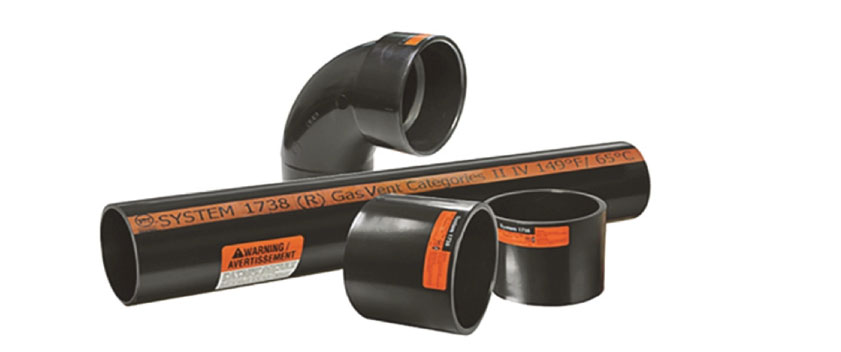
PLASTIC VENT PIPING (Used With Permission IPEX USA LLC)
From the 2024 UMC Illustrated Training Manual, Chapter 13 – FUEL GAS PIPING
1310.9.2 Sediment Traps. The installation of sediment traps shall be in accordance with Section 1312.9. [NFPA 54:7.6.3]
Sediment traps are referenced to Section 1312.9 so that the requirements are not duplicated.
Sediment traps, sometimes confused with drip traps, are installed to collect solid foreign particles to prevent such material from entering close-fitting parts or small passageways (e.g., valves and orifices). Although some gases can contain foreign solids, this situation is not likely to be a problem in either utility gas or LP-gas because of the methods and equipment used in handling these products. Dirt and pipe material cuttings that make their way into the system during construction and are present in limited amounts are the target of sediment traps. Thus, sediment traps seldom need to be opened for service or cleaning.
Many appliance manufacturers provide sediment traps in their appliances, and a number of the ANSI Z21 standards for gas appliances require the installation of a sediment trap.
Section 1312.9 requires the installation of a sediment trap at the time of installation of most appliances if the appliance is not already equipped with one.
1312.9 Sediment Trap. Where a sediment trap is not incorporated as a part of the appliance, a sediment trap shall be installed downstream of the appliance shutoff valve as close to the inlet of the appliance as practical at the time of appliance installation. The sediment trap shall be either a tee fitting with a capped nipple in the bottom outlet, as illustrated in Figure 1312.9, or another device recognized as an effective sediment trap. Illuminating appliances, gas ranges, clothes dryers, decorative appliances for installation in vented fireplaces, gas fireplaces, and outdoor cooking appliances shall not be required to be so equipped. [NFPA 54:9.6.8]
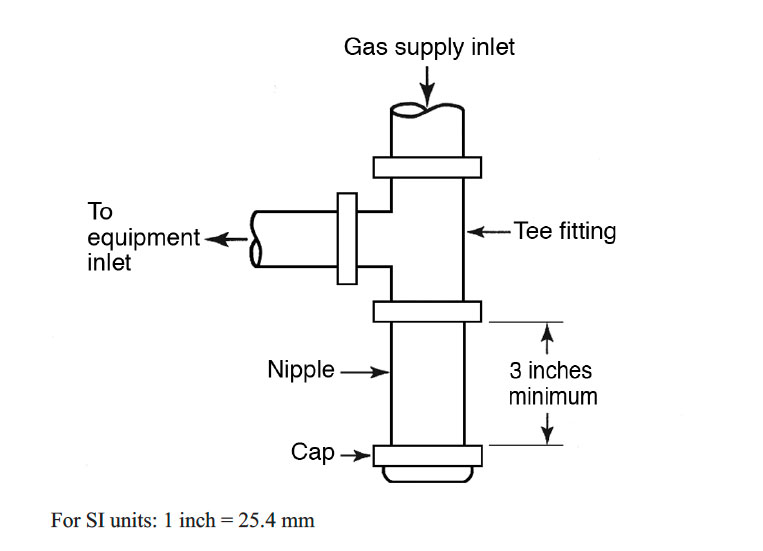
METHOD OF INSTALLING A TEE FITTING SEDIMENT TRAP [NFPA 54: FIGURE 9.6.8]
(This is not to be considered the official position of IAPMO, nor is it an official interpretation of the Codes.)

IAPMO
IAPMO develops and publishes the Uniform Plumbing Code®,the most widely recognized code of practice used by the plumbing industry worldwide; Uniform Mechanical Code®; Uniform Swimming Pool, Spa and Hot Tub Code®; and Uniform Solar Energy, Hydronics and Geothermal Code™ — the only plumbing, mechanical, solar energy and swimming pool codes designated by ANSI as American National Standards — and the Water Efficiency Standard (WE-Stand)™. IAPMO works with government, contractors, labor force, and manufacturers to produce product standards, technical manuals, personnel certification/educational programs and additional resources in order to meet the ever-evolving demands of the industry in protecting public health and safety.
Last modified: July 9, 2026