IAPMO And DPHA Are Exploring New Educational Initiatives Aimed At Helping Showroom Professionals Identify Compliant Products And Guide Consumers Toward Safer Choices
When IAPMO Business Development Director Brenda Madonna attended a recent Decorative Plumbing and Hardware Association (DPHA) meeting, a comment she made during a roundtable discussion stopped the room.
As attendees learned more about the volume of noncompliant and potentially unsafe plumbing products entering the U.S. marketplace — including water filtration systems seized for failing to meet code requirements — the reaction was immediate. For many showroom professionals, it was the first time they had considered the scale of the issue or the role they could play in preventing it.
The discussion reinforced a growing concern across the industry: as counterfeit
and noncompliant products become more common online, education at the point of sale is increasingly important to protecting consumers and supporting code-compliant installations.
The conversation has since sparked interest in closer collaboration between IAPMO and DPHA around education, awareness and product safety.
Niche, Broad Influence
DPHA represents a specialized but influential segment of the plumbing and building industry. Its membership includes decorative plumbing showrooms, manufacturers and independent representatives, with growing engagement from designers, builders and other allied professionals.
Phil Hotarek, president of DPHA and owner of Lutz Plumbing, has worked both in the showroom and in the field and sees firsthand how product decisions made in showrooms affect installations on the jobsite.
“While DPHA was founded as a niche association for showrooms and manufacturers, we are evolving into a connective tissue for the broader industry,” Hotarek said. “Our mission has shifted toward integration — bringing designers, builders and trade organizations into the fold to ensure we aren’t operating in isolation, but rather connecting all the ‘puzzle pieces’ of a project
from the start.”
DPHA’s annual showcase draws roughly 400 attendees, with overall membership approximately double that number. While smaller than large-scale trade events, the organization’s focused scope allows for deeper engagement on issues directly affecting decorative plumbing and hardware professionals.
Showrooms on Front Lines
While showroom professionals often serve as a primary point of contact for homeowners, designers and builders selecting plumbing fixtures and systems, Hotarek said there can be a disconnect between product sales and code and safety awareness.
“There is often a gap between the point of sale and the point of installation,” he said. “My goal is to integrate safety and code compliance directly into the sales process so that the ‘beauty’ of a decorative fixture is matched by its performance in the field.”
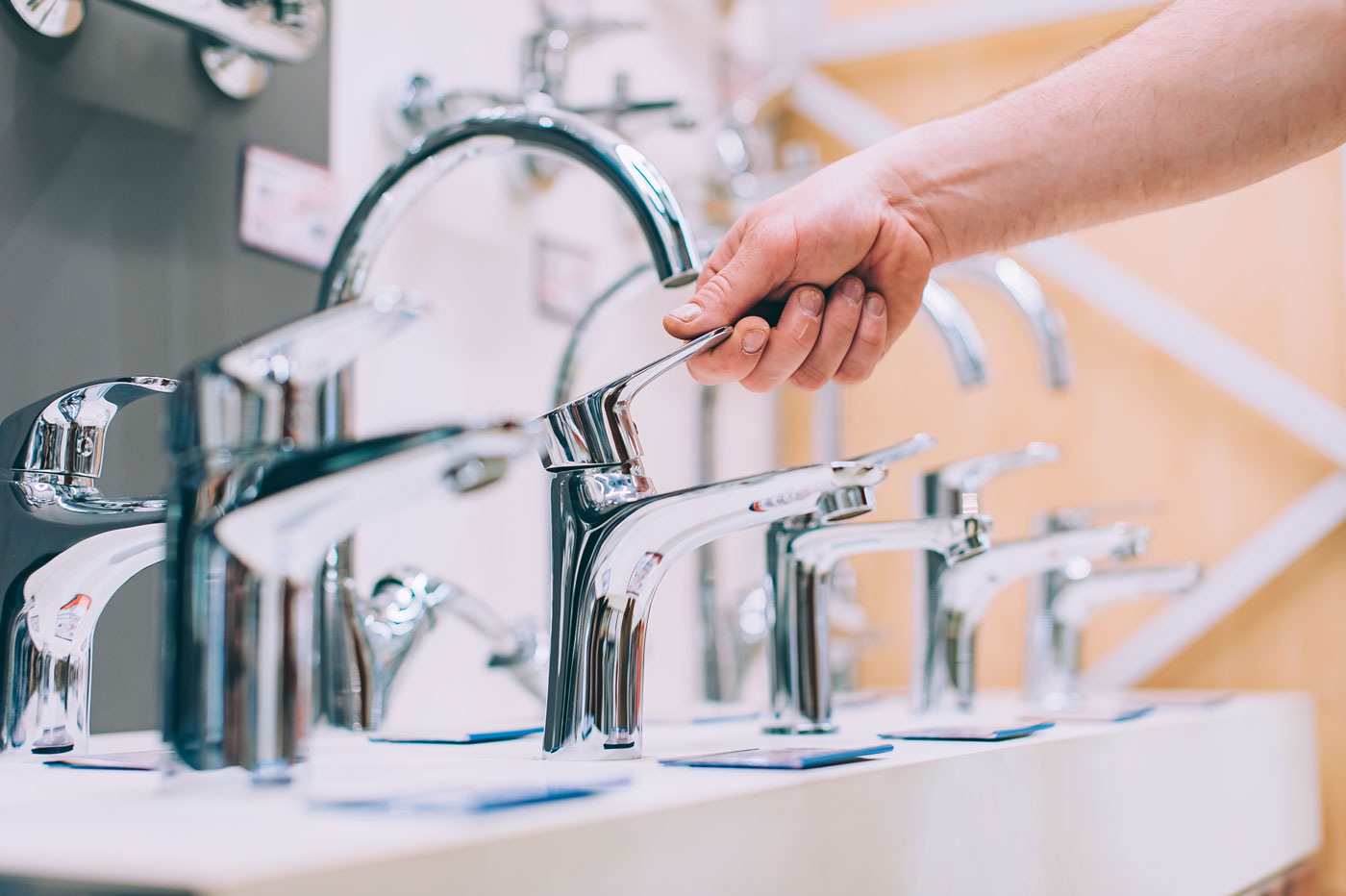
That gap can have real-world consequences once products reach the jobsite. Decorative plumbing fixtures — including faucets, filtration systems, shower components and smart toilets — are increasingly available through online marketplaces at steep discounts. In many cases, the products appear identical to those sold through authorized channels but may not meet code or performance standards.
Hotarek said showroom professionals who understand plumbing codes and certification requirements can help prevent installation problems long before products reach the jobsite.
GETTY IMAGES
Counterfeit Risks Grow
During IAPMO’s participation in the DPHA meeting, discussions around product compliance — particularly in the filtration category — resonated strongly with attendees. Many were unaware of the extent to which noncompliant or counterfeit products are entering the market through online sales channels.
“It was a rare moment where an ‘obvious’ truth stopped the room,” Hotarek said. “We realized that despite our expertise, there was a level of market risk regarding noncompliant products that we simply weren’t aware of, and that realization has completely shifted our focus toward better education.”
Online marketplaces have made it easier than ever for consumers to compare prices and purchase plumbing fixtures and systems directly. However, those lower-priced options may come with hidden risks.
Hotarek said showroom professionals often lose sales to online retailers where customers assume filtration products are interchangeable commodities, even when those products may not meet code or performance standards.
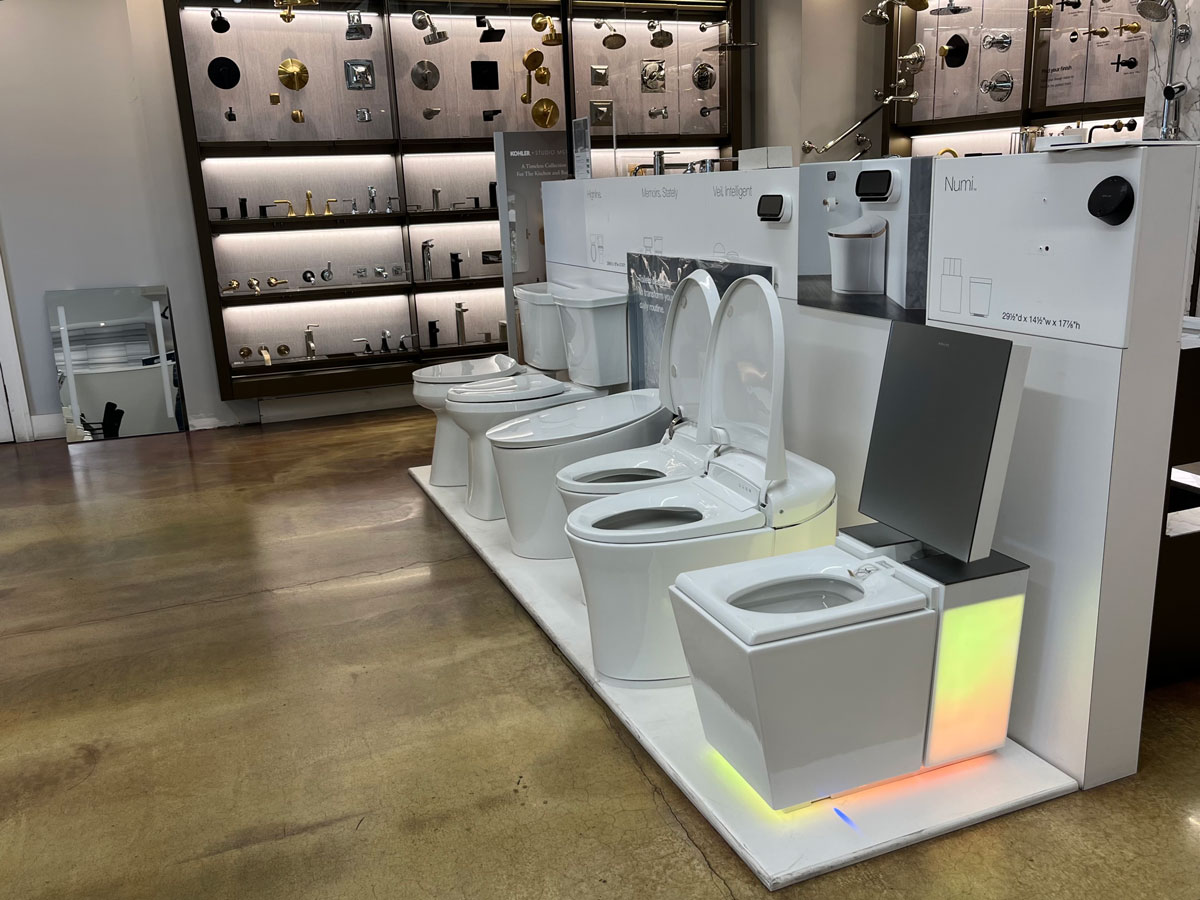
The issue extends beyond filtration systems. Decorative faucets, shower systems and highend smart toilets are also frequently replicated or imitated.
“This happens all the time,” Hotarek said. “We sell smart toilets, we sell faucets. Brass is a big part of our showroom business. We sell a lot of faucets and shower systems and stuff like that. It’s very common for people to buy a counterfeit faucet online. Smart toilets are being copied a lot these days. You’ll see something that looks just like a Toto and it’s a fraction of the price, and you’re like, something’s wrong.”
He added that consumers often do not realize the risks.
Hotarek said imitation products frequently mimic premium brands while lacking the engineering, durability and certification required for safe installation.
“Consumers are frequently ensnared by what I call the ‘fast-fashion trap’ — buying into a look without understanding the engineering. They see a targeted ad for a toilet that promises a $5,000 savings compared to a reputable brand, but they don’t realize they are actually spending thousands of dollars on a substandard product that won’t last. They aren’t finding a deal; they are purchasing an expensive liability.”
GETTY IMAGES
Education Drives Safety
For DPHA members, access to reliable technical information and credible sources is essential not only for protecting consumers but also for supporting professional sales and installation practices.
“Personal opinion only goes so far in a sales consultation,” Hotarek said. “By utilizing IAPMO’s certification standards, we move beyond anecdotal warnings and provide our clients with a professional, third-party source that validates why choosing a compliant product is the only responsible choice.”
Clearer information about product certification and compliance can help showroom professionals guide customers and avoid potential issues.
Hotarek said the partnership will help DPHA members move beyond traditional product sales discussions and toward deeper conversations about safety, certification and compliance.
Partnership Takes Shape
The initial engagement between IAPMO and DPHA has already sparked interest in ongoing collaboration. Potential initiatives discussed include joint articles, educational webinars, podcast conversations and presentations at DPHA events to provide updates on code developments, product compliance trends and emerging risks.
For IAPMO, the partnership represents an opportunity to extend outreach beyond traditional audiences of inspectors, engineers and contractors to include professionals who influence product election earlier in the process.
“For 100 years, IAPMO’s mission has centered on protecting public health and safety through codes and standards,” Madonna said. “When showroom professionals understand compliance, they play an integral role in preventing noncompliant — even dangerous — products from reaching homes and businesses. These professionals influence product decisions long before an inspector or contractor ever sees the job, so when they understand what compliance really means — and what can go wrong if it’s ignored — they become a vital part of the safety chain. By sharing what we’re seeing in real time, we can help showroom professionals guide consumers toward products that are certified, compliant and safe.”
Madonna said the issue extends beyond isolated incidents and reflects a broader trend the organization is monitoring across the industry.
“We’re seeing more noncompliant and counterfeit plumbing products enter the market than ever before, especially through online channels,” Madonna said.
“Many of these items appear legitimate on the surface, but they haven’t been tested to industry requirements, they don’t meet code and in some cases they pose real safety risks. Education at the point of sale is an effective tool to protect consumers. The challenge is growing, and awareness is the first step.”
DPHA leadership views the relationship as mutually beneficial, providing members with access to technical expertise while supporting broader industry efforts to maintain product quality and safety.
“As a plumber, I’m excited,” Hotarek said. “I’m always trying to share my knowledge with the group, but it’s better when there’s more organizations and more people contributing to that. Having IAPMO as a credible source helps everyone. It supports the trade, it supports professionals, but ultimately it keeps the end user safe.”
Industrywide Challenge
With more plumbing products being purchased online, concerns about compliance and product quality are growing. Better awareness and education can help showroom professionals and contractors guide customers toward safer, codecompliant choices.
For both organizations, the recent meeting served as an introduction and a starting point for continued collaboration.
“This is about awareness and education,” Hotarek said. “If we can keep that loop going and keep people informed, it helps the entire industry and it helps keep people safe.”
Editor’s note: Brenda Madonna, who served as IAPMO’s Business Development director when this article was written, is no longer with the organization.

Mike Flenniken
Mike Flenniken is a staff writer, Marketing and Communications, for IAPMO. Prior to joining IAPMO in 2010, Flenniken worked in public relations for a group of Southern California hospitals and as a journalist in writing and editing capacities for various Southern California daily newspapers.
Last modified: July 14, 2026