
The Role Of Rainwater Catchment In The Southeast
As extreme weather becomes more common across the Southeastern United States, interest in rainwater harvesting is rising — not just for drought resilience, but for managing the region’s increasingly intense rain events.
G. Edward “Eddie” Van Giesen, national sales manager for RainCycle, a Watts company, has spent nearly two decades advocating for rainwater catchment. He served as principal author of Georgia’s first “Rainwater Harvesting Guidelines” in 2009 and continues to advance system design and policy development across the region. In 2014, he co-authored the book “Designing Rainwater Harvesting Systems: Integrating Rainwater into Building Systems.”
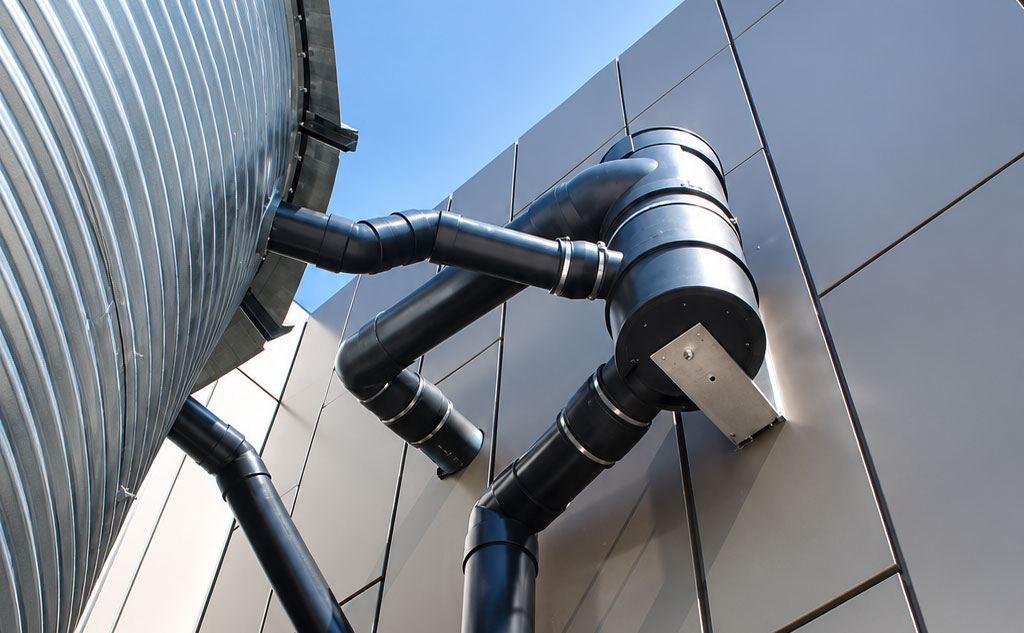
Frequently referred to as rainwater harvesting, rainwater catchment is the practice of collecting rain from a roof surface, directing it toward a storage tank, and in most cases, pumping, treating and filtering that water according to the end use.
Fitting for the Southeast
Van Giesen said rainwater systems can be implemented in nearly every climate where rain falls, but the Southeast offers particularly favorable conditions.
“We have a fairly temperate climate,” he said. “You can regularly use above-grade tanks — that’s with caveats — and it rains basically 12 months out of the year most years.”
Because of that regularity, he said, systems can be more efficient.
“It’s easier if you’ve got more rainfall — you don’t have to have as big a storage because it comes in and out quicker,” he said. “But at the end of the day, it’s a mathematical relationship between the size of the collection area or the roof, and the potential rainfall. And, of course, the demand — the water you’re actually demanding for the building, for the end use.”
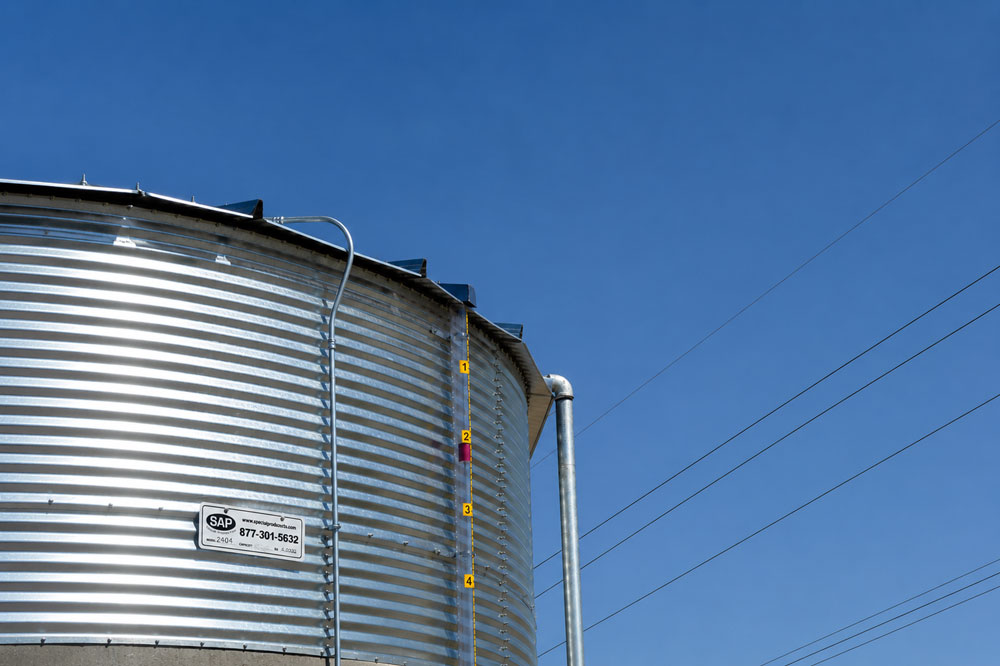
PHOTO COURTESY OF ARCSA INTERNATIONAL
Stormwater Management Tool
Rainwater catchment systems don’t just provide water — they help manage it. As more natural surfaces are paved, imperviousness and water runoff increase, causing additional problems downstream. This is among the factors that have led to flooding all over the Southeast. These systems help mitigate that issue.
“Rainwater harvesting systems act like sponges,” Van Giesen said. “Similar to how a green roof would act, absorbing a certain amount of water to slow down some of the intense outpouring off of impervious roof surfaces.”
By holding water temporarily in tanks, these systems reduce pressure on storm drains and natural waterways.
“It’s a way of pulling away some of the water that would ordinarily run directly into the stormwater system or the rivers, creeks, or streams, and letting it drain more slowly,” he said.
Reliability During Droughts
In addition to mitigating flooding, rainwater catchment systems can serve as a supplemental water source during droughts — if they are properly sized and designed. Van Giesen said water stored in a welldesigned tank can sit indefinitely without going foul, especially if the system includes adequate pre-filtration before the water enters the tank and aeration once it is in the tank.
Van Giesen emphasized the importance of ensuring the tank has enough water to meet the building’s needs, reiterating the mathematical relationship between how much water can be collected — based on roof surface and the geographical location — and how much is required, which ultimately determines the required tank size.
“For example, if the toilet demand on X building was 1,000 gallons a day, how many days in the year would the building have enough water to supply 100% of this daily demand?” he said.
He said one of the most underappreciated benefits of rainwater catchment systems is their ability to manage stormwater by slowing the release of runoff during heavy rain events. While this concept is intuitive to those in the industry, it can be difficult for the general public to grasp. He explained that when rain is captured in a tank and released gradually after the storm has passed, it helps prevent creeks, streams, and rivers from becoming overwhelmed. In urban environments, however, water runs off quickly from impervious surfaces like roofs, roads, and sidewalks, leading to increased flooding and erosion.
Van Giesen recounted how he explained this at his church, where a small rain tank had been installed. Although people initially struggled to see the value, once he laid it out clearly, they began to understand the environmental impact.
“Most people are smart enough to understand the concept if it’s explained to them the right way,” he said.
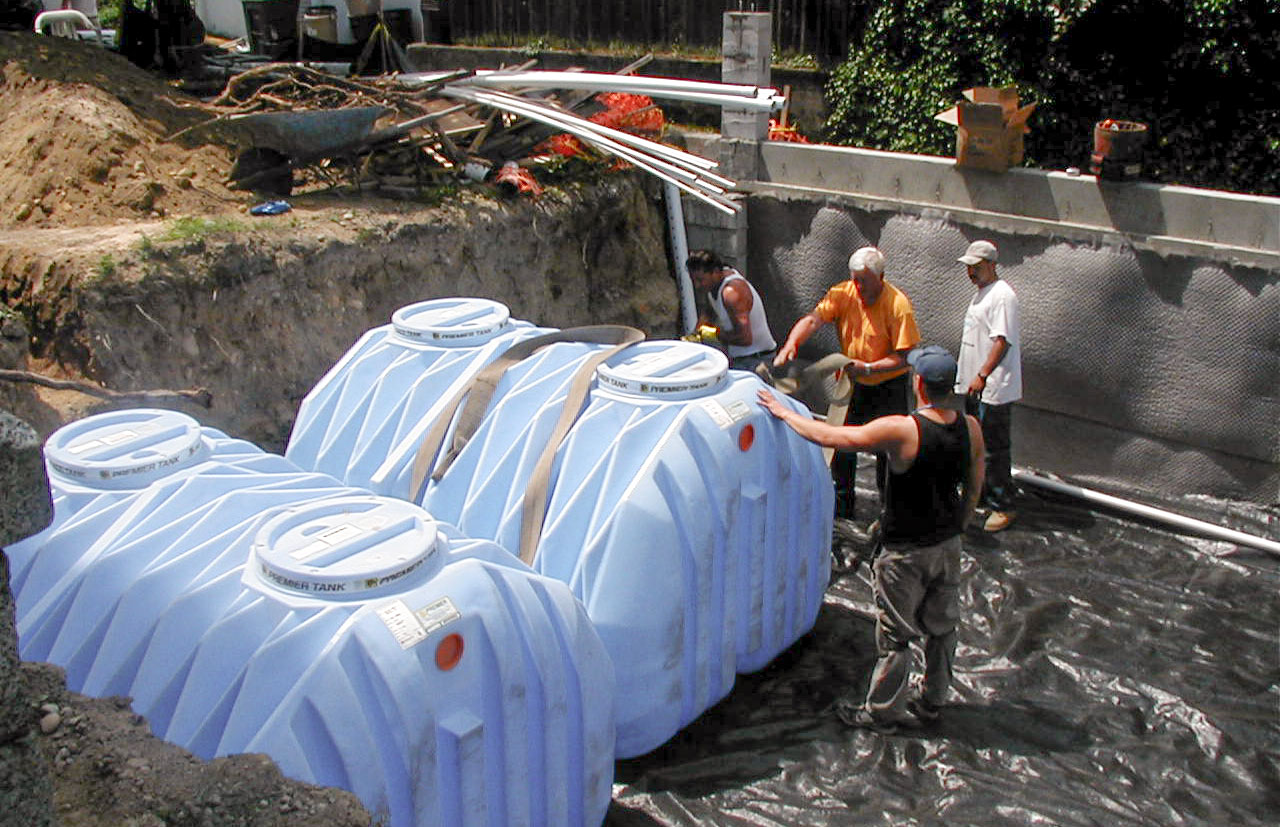
Underground rainwater storage tanks are installedduring construction, allowing buildings to capture and store rainwater for reuse while reducing stormwater runoff.
PHOTO COURTESY OF ARCSA INTERNATIONAL
Design Process is Critical
Van Giesen said no single design element ensures a rainwater harvesting system is safe and effective — what matters most is how all components function together as a cohesive system.
“The rainwater system, by definition, is not necessarily the sum of its parts,” he said. “They have to work together.”
The design process begins with the collection surface — typically the roof. Van Giesen stressed the importance of inspecting the roof for debris, chemical residue, or deterioration, all of which can affect water quality depending on the intended end use. A deteriorating or neglected roof can introduce pollutants that downstream filtration may not be able to handle effectively.
The next critical component is the inlet pre-filter, typically a gravity-fed screen that removes larger debris such as leaves, acorns, or roofing grit before water enters the storage tank. Without this filtration step, tanks can accumulate organic material and other contaminants that degrade water quality and complicate treatment.
Proper tank design is equally important. Key considerations include blocking sunlight to prevent algae growth; restricted access so people don’t open the tank, drop or throw items like tools inside, or accidentally fall in; and providing — “water in, air out,” he said. It’s also important to keep the tank out of direct sunlight, because hotter water can promote the growth of bacteria such as Legionella. Materials used for the tank and other components must be non-leaching, especially when the system is intended for potable water use.
From there, the system must include appropriate pumping and filtration tailored to the water’s end use. For example, water intended for irrigation may require less treatment than water used for indoor applications such as toilet flushing or cooling towers.
In some cases, pH adjustment may also be necessary, as rainwater tends to be slightly acidic depending on the region of the country. “Remember, rain does not equal rainwater,” Van Giesen said. “Rain is what is in the atmosphere before it hits the surface. Rainwater is after the rain hits the surface and runs off it because it’s going to continue to pick up contaminants.”
Finally, Van Giesen emphasized the importance of system scalability and understanding usage patterns. Unlike a residence with consistent demand, commercial or institutional facilities may experience highly variable water use. A system serving restrooms in a university auditorium, for instance, must account for periodic spikes in demand when events are held.
Avoiding Common Mistakes
Van Giesen said a common mistake people make when it comes to rainwater catchment systems is assuming they can be installed and then left alone. With domestic water lines, people know there will be little — if any — change in water quality from day to day. Rainwater catchment systems, however, are subject to climate variability, debris, freezing temperatures, which must be planned for and then monitored.
Additionally, he said many commercial projects are doomed by overly complicated designs that not only drive up installation and maintenance costs, but increase the likelihood that a system will be misunderstood, poorly maintained, or value-engineered out of a project altogether.
“You can always solve a problem with one more valve, one more control point, one more device, one more appurtenance,” he said. “On paper it looks good, but at the end of the day, someone’s got to understand and maintain all of that.”
Pump selection is another area where he said mistakes are common. Choosing the wrong type of pump or control system can lead to inefficiency or failure, especially in systems serving buildings with variable demand. Van Giesen stressed that pump selection requires experience and shouldn’t be treated as an afterthought.
“Picking the right kind of pump and the right kind of control is something that takes some experience, and frequently we see mistakes made by people unfamiliar with pumping,” he said. “Another one that I’ve seen over the years is the wrong types of storage vessels. Often storage vessels are designed in places where it’s just too cold.”
Van Giesen said that when the rainwater system is integrated into the building at the beginning of the design process the overall chances of success of the project are greatly increased. This includes the shape of the roof and its orientation, how the downspouts — whether internal roof drains or external — are directed toward the storage tank, and where the tank and pumps will be stored.
“So often rainwater systems are just thought of as, ‘Well, we’ve designed the building — let’s put a rain system on it,” Van Giesen said.
Incentives and Awareness
Van Giesen said while the model plumbing codes contain language referencing rainwater catchment systems and are available to most states in the U.S. — something that was not the case 15 years ago — more needs to be done to encourage their implementation and use. Because water is cheap compared to utilities, Van Giesen said people are reluctant to invest in a rainwater system that can take more than a decade to pay off.
“We need policies that encourage people to do this — perhaps with tax incentives, perhaps with rebates — to get people to invest in these systems because the return on investment can be really challenging, especially in the commercial world where we’re paying so little for water,” he said.
Along with this, Van Giesen — a member of ARCSA International’s Education and Research Council — said public awareness campaigns, school programs and even rain barrel initiatives are vital to helping increase people’s literacy about water and where it comes from and can play a crucial role in helping address flooding and water scarcity issues. The latter, he noted, have been successful in the South for years.
“You can’t discount the importance of rain barrel programs,” he said. “As people learn more about the power of harvesting rain, they begin to use them for their gardens and maybe down the road, they want something bigger.”
While small-scale efforts like rain barrel programs can spark greater interest and adoption, he said broader change has been slower than he expected.
“I thought we’d be a lot further along by now,” he said. “When I started in this business in 2007, Georgia was in the middle of a big, huge drought and it was effectively illegal to capture rainwater in the state. But despite the slowerthan- expected pace, the industry is bigger than ever, public interest continues to grow and I’m sure that we will see more and more systems over the next three to five years.”

Mike Flenniken
Mike Flenniken is a staff writer, Marketing and Communications, for IAPMO. Prior to joining IAPMO in 2010, Flenniken worked in public relations for a group of Southern California hospitals and as a journalist in writing and editing capacities for various Southern California daily newspapers.
Last modified: July 14, 2026