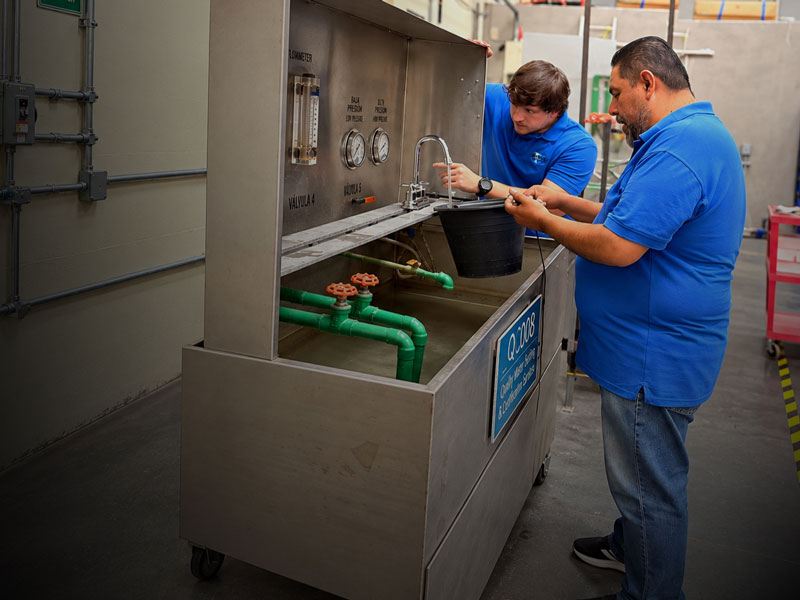
For plumbing product manufacturers, the location of a testing laboratory can have a direct effect on how quickly a product moves through the certification process. Shipping large or heavy samples across long distances adds cost and time. Access to technical staff who understand the applicable market can also make compliance questions easier to address.
IAPMO R&T’s latest expansion of its Monterrey-based IAPMO Mexico laboratory is intended to address those practical concerns. The laboratory is now recognized to conduct testing to a broader group of American standards supporting cUPC certification, including NSF/ANSI/CAN 372 for lead content compliance.
The expanded scope marks another stage in the development of a laboratory that was established with a longer-term vision in mind.
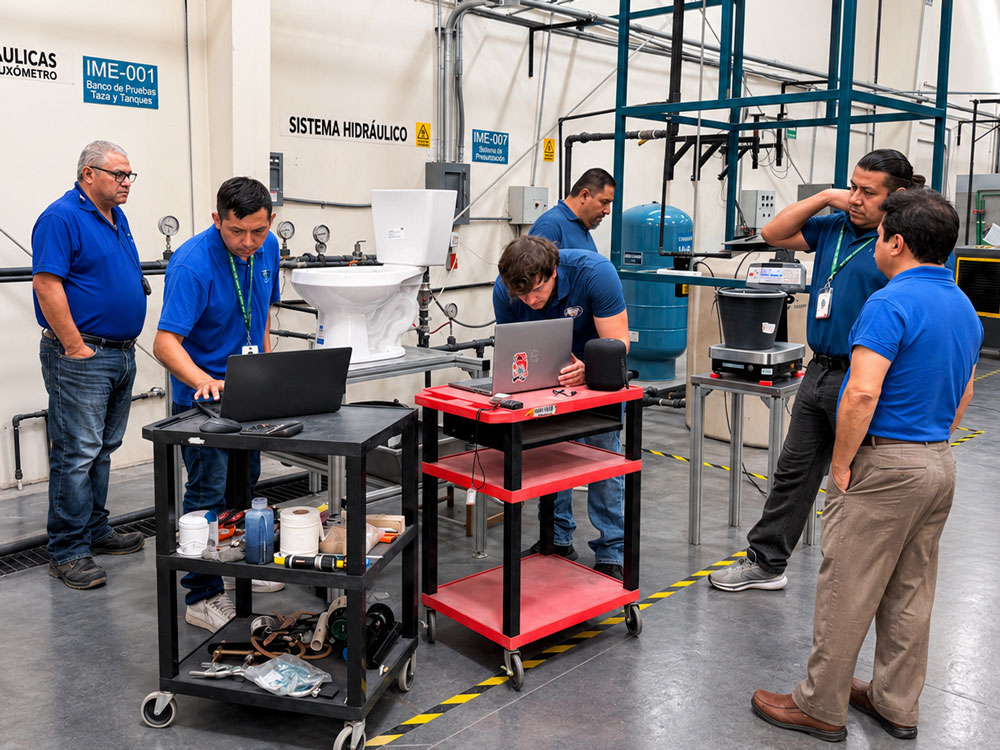
When IAPMO Mexico opened in Monterrey in 2023, its initial testing focus was on toilets manufactured for the Mexican market. The facility grew out of several years of work involving manufacturers and Mexico’s national water commission, Comisión Nacional del Agua (CONAGUA).
Even at that stage, however, the laboratory was envisioned as more than a facility serving one category of product. Its Monterrey location placed testing closer to one of Mexico’s major manufacturing centers. Before the laboratory opened, some manufacturers had to ship large plumbing products almost 600 miles for testing in Mexico City. For products such as toilets, that distance could add meaningful freight expense while extending the time required to move through the certification process.
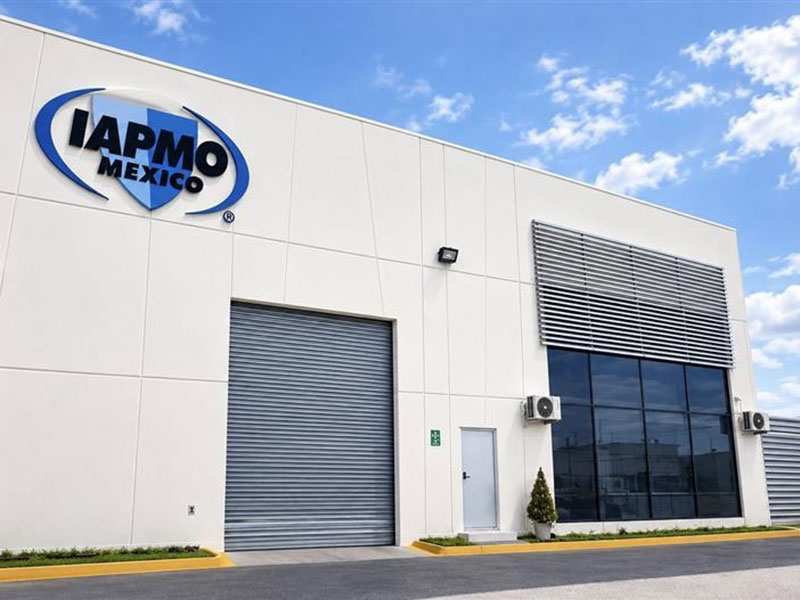
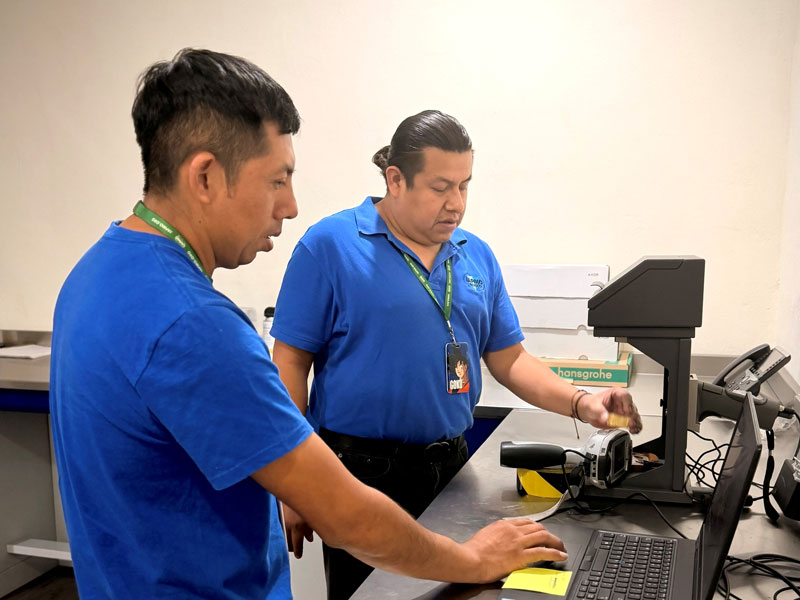
LEF: IAPMO Mexico’s 10,000-square-foot test lab facility is conveniently located in Monterrey, Mexico, one of the largest industrial hubs in the country and home to many plumbing product manufacturers. RIGHT: IAPMO Mexico technicians use a spectrometer to measure lead (Pb) in water samples, supporting the laboratory’s expanded capabilities for testing to additional U.S. standards. PHOTOS COURTESY OF IAPMO MEXICO
The laboratory was also positioned to provide manufacturers in Mexico and elsewhere in Latin America with access to personnel familiar with regional manufacturing needs and North American certification processes. Local-time-zone support and Spanish-language expertise were important parts of that approach. The newly expanded recognition builds on that foundation.
IAPMO Mexico’s expanded scope now includes testing supporting use of the UPC® mark to standards and requirements covering drinking water faucets, valves and fittings, tank-type water closets and urinals, dual-flush water closets, EPA WaterSense requirements, fill valves and other plumbing product categories.
Among the standards and requirements within the laboratory’s scope are ASME A112.19.2-2024/CSA B45.1-24, NSF/ANSI/CAN 372-2024, ASSE 1002-2020/ASME A112.1002-2020/CSA B125.12-20 and ASME A112.19.5-2022/CSA B45.15-22. The scope also addresses the EPA WaterSense Specification for Tank-Type Toilets and Section 1417(d) of the Safe Drinking Water Act and other applicable U.S. lead-content requirements.
For manufacturers producing potable-water products, the addition of NSF/ANSI/CAN 372 testing is particularly significant. The standard provides a method for demonstrating compliance with lead-content requirements applicable to products that come into contact with drinking water. It supports compliance with requirements including Section 1417(d) of the U.S. Safe Drinking Water Act and Section 116875 of the California Health & Safety Code.
That makes the expanded laboratory increasingly relevant not only to companies manufacturing products in Mexico, but also to manufacturers using Mexico-based production for products ultimately intended for the United States market.
Why Laboratory Access Matters Beyond the Manufacturer
Testing and certification decisions have implications throughout the plumbing industry. For manufacturers, recognized testing provides documented evidence that a product has been evaluated against the standards applicable to its intended market. For engineers and specifiers, certification information can help determine whether a product is appropriate for a project.
Inspectors and other code officials depend on credible conformity-assessment information when evaluating products installed in the field.
Those groups ultimately share the same need: confidence that products have been evaluated using established standards and appropriate technical procedures.
Expanding recognized testing capacity can also give manufacturers more flexibility in deciding where testing takes place. Instead of automatically transporting products to a U.S. laboratory, qualifying products manufactured in Mexico may now be evaluated closer to their production location while remaining within the IAPMO R&T certification process.
“Manufacturers are looking for clear, efficient pathways to demonstrate product compliance and access key markets,” said Tom Palkon, IAPMO executive vice president and chief Technical Services officer. He noted that the expanded laboratory capabilities provide additional testing and certification options while maintaining the technical rigor associated with IAPMO R&T certification.
The expansion reflects a broader change in how product conformity services can support an increasingly interconnected manufacturing industry. Products may be designed in one country, manufactured elsewhere and sold throughout North America. Testing infrastructure that develops alongside those manufacturing patterns can reduce unnecessary logistical barriers without changing the standards products are expected to meet.
For manufacturers considering the Mexico laboratory, the next step is to determine whether a product falls within its recognized scope. IAPMO R&T can help identify product eligibility, applicable testing requirements and the appropriate certification pathway, helping manufacturers move forward with greater clarity and confidence as they prepare products for the North American market.

Last modified: November 18, 2026