July 30, 2026
From the 2024 UPC Illustrated Training Manual, Chapter 3 – GENERAL REGULATIONS
312.6 Freezing Protection. No water, soil, or waste pipe shall be installed or permitted outside of a building, in attics or crawl spaces, or in an exterior wall unless, where necessary, adequate provision is made to protect such pipe from freezing.
All plumbing piping must be protected from freezing. The required depth of cover over underground piping will be determined by the AHJ based on the minimum anticipated temperature, the type of soil and porosity and the average moisture content of the soil. These factors determine the average depth of frost penetration. It is necessary to protect piping installed in locations such as attics and crawl spaces that may be susceptible to freezing temperatures. Adequate protection may include piping insulation, building insulation or other means necessary to prevent freezing.
Figure 312.6 shows methods of providing such protection.
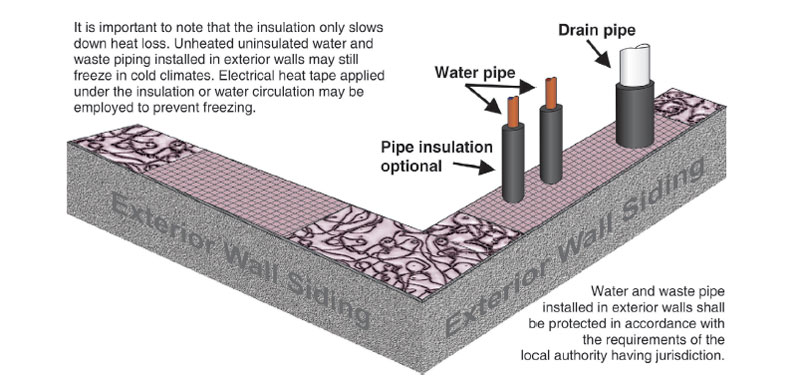
PROTECTION OF PIPING IN EXTERIOR WALLS
From the 2024 UMC Illustrated Training Manual, Chapter 13 – FUEL GAS PIPING
1308.7 Overpressure Protection. Where the serving gas supplier delivers gas at a pressure greater than 2 psi for piping systems serving appliances designed to operate at a gas pressure of 14 inches water column or less, overpressure protection devices shall be installed. Piping systems serving equipment designed to operate at inlet pressures greater than 14 inches water column (3.5 kPa) shall be equipped with overpressure protection devices as required by the appliance manufacturer’s installation instructions. [NFPA 54:5.8.1]
With increasing uses for gas utilization equipment and with the economy of using higher pressures for smaller diameter gas-piping systems, a need frequently exists for line gas pressure regulators to deliver proper gas pressures to equipment or groups of equipment (see Figure 1308.7a). This system is similar to transformers reducing high voltage for smaller wires to supply the proper loads.
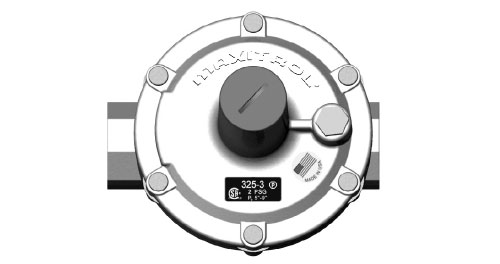
GAS LINE REGULATOR WITH VENT-LIMITING MEANS
(Courtesy of Maxitrol Company)
Note that this section refers to line pressure regulators and not appliance regulators. Appliance regulators are covered in Section 902.14.
Sections 1308.8 through 1308.9.7 are direct extractions from the latest version of NFPA 54 dealing with overpressure protection devices (OPD) for fuel gas systems exceeding 2 psi pressure. The requirements for these sections are based, in part, on the provisions found in standard ANSI Z21.80/Can 6.22 Line Pressure Regulators, Section 3.8 (see Figure 1308.7b).
This section of the standard applies to overpressure protection devices which are integral parts, or provided with Class I or Class II regulators with inlet pressures exceeding 2 psi pressure and outlet pressures limited to less than ó psi pressure. Class I regulators can be certified for inlet pressures of 2, 5 and 10 psi with maximum outlet pressure settings of ó psi. Class II regulators can be certified for inlet pressures of 5 or 10 psi with maximum outlet pressure of 2 psi. Per Section 1308.8.1, overpressure protection devices must also be provided for Class II regulators that have outlet pressures that exceed ó psi. Line pressure regulators with separate overpressure protection devices shall be factory preassembled, tested and supplied to the field as a unit. In lieu of an overpressure protection device, a pressure relief valve may be provided downstream of the regulator. In the event that the line pressure regulator fails wide open the relief valve must provide overpressure protection that does not exceed the regulator’s operating inlet pressure.
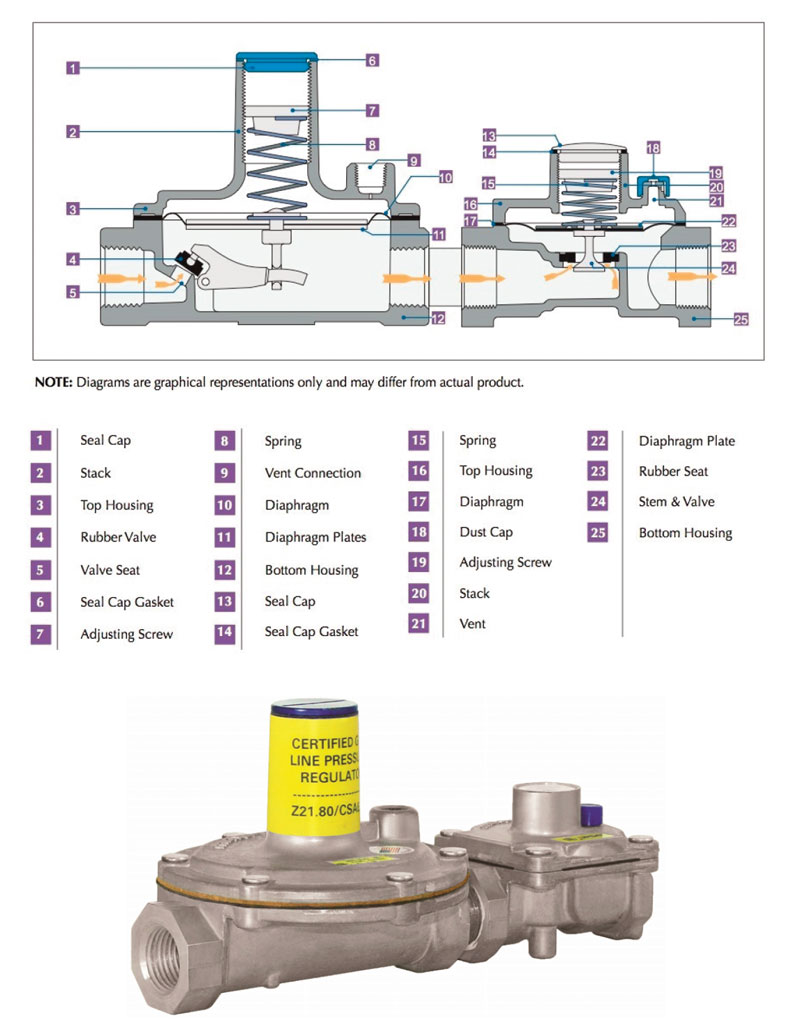
LINE PRESSURE REGULATOR
(Courtesy of Maxitrol Company)
(This is not to be considered the official position of IAPMO, nor is it an official interpretation of the Codes.)

Last modified: July 30, 2026