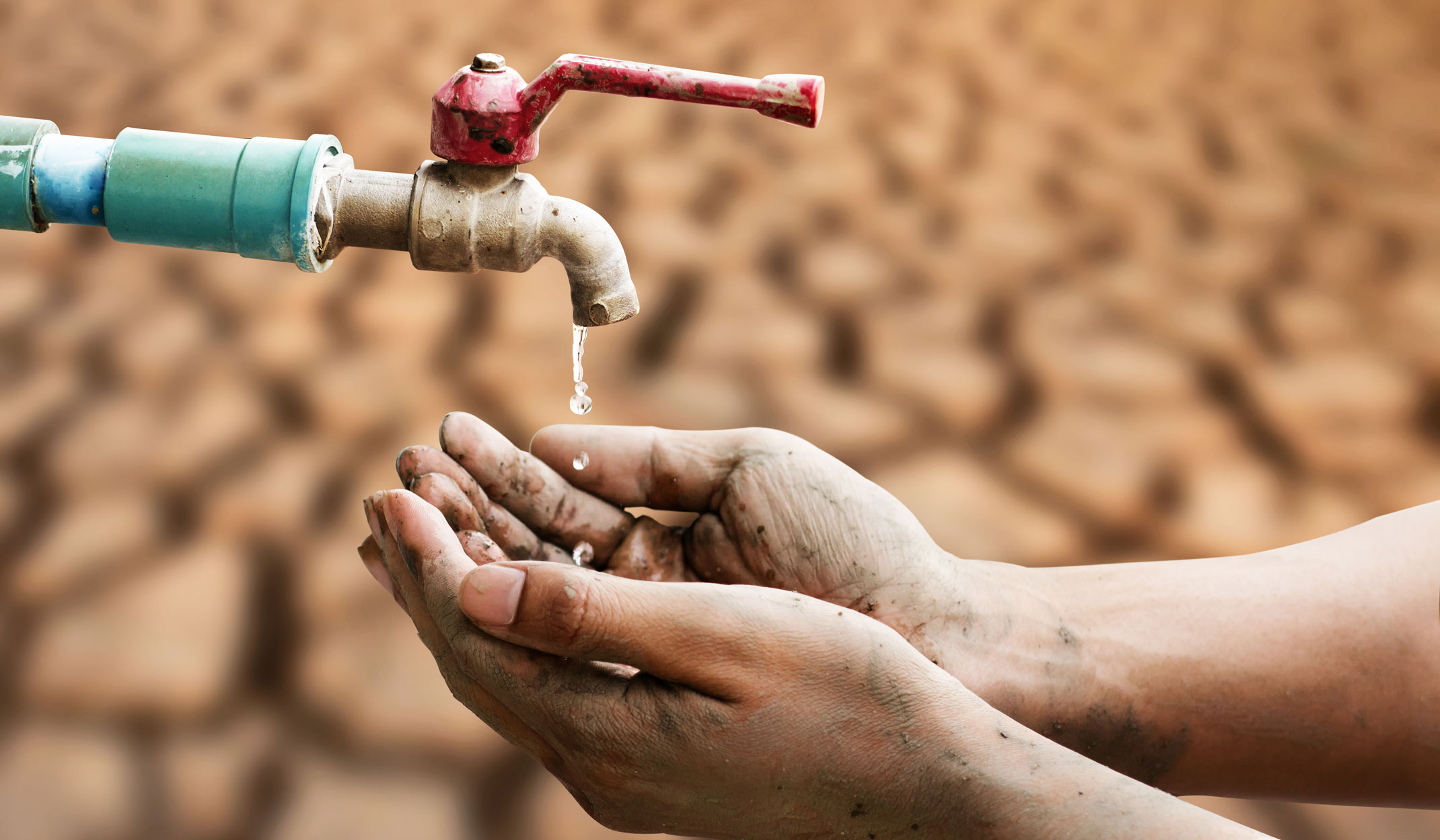
‘Why should the government and private sector come together to provide improved access to clean drinking water?’
RUNNER-UP 2025 IWSH SCHOLARSHIP ESSAY COMPETITION

Sakethram Ramakrishnan
SUWANEE, GA ATTENDING JOHNS HOPKINS UNIVERSITY
Unfortunately, we had another child pass away from diarrhea last week.” Coach Teza said it like he was announcing a tennis score — dry, practiced, almost mechanical. In Cipalo, Zambia, that sentence wasn’t shocking. It was normal. It shouldn’t be.
Since then, my work with SoChabe Zambia has been about making sure no one says that again. As director of International Operations, I’ve helped raise more than $230,000 for a community clinic, expanded the village school through eighth grade, built a solar farm, and created stipends to help girls stay in school. I’ve hosted medical drives, developed disease prevention workshops, and crafted public health campaigns that doubled literacy rates and cut infection rates.
Water was always at the center of everything, but it was so delicate.
Access to clean water isn’t just about pipes or pumps. It’s about who is willing to build, fix, and protect those systems. And the truth is, no single actor can do it alone. Governments and private companies have to come together — or they risk leaving millions behind.
The government brings the reach, regulations, and funding; private companies bring innovation, materials, and skilled workers. When they collaborate, they create systems that survive droughts, floods, political shifts, and economic shocks.
I think about India often. It’s where I was born, and it’s a place where millions still face barriers to clean water. Across rural India, water often arrives late, dirty, or not at all. Families walk miles to find water that may still cause disease. Girls miss school to collect it. Mothers watch their children battle infections that clean water could have prevented.
These patterns stretch across the globe. In Kenya, solar-powered kiosks created by Safe Water Network now provide affordable clean water while training local plumbers to maintain them. Health outcomes improved almost overnight.
On Navajo Nation land, the International Water, Sanitation and Hygiene Foundation (IWSH) worked with tribal leaders to install proper plumbing — finally delivering water after decades of waiting. IWSH focuses on helping local communities by providing plumbing training and promoting building techniques that last.
Even in wealthy nations, the cracks show. In Flint, Michigan, lead contamination poisoned families and destroyed trust in public infrastructure. In Jackson, Mississippi, years of underfunding left pipes crumbling. When storms came, taps ran dry for weeks. And across the American West, tribal reservations face water access rates worse than many developing countries.
Clean water isn’t a luxury item. It’s the starting point for everything else: health, education, work, dignity.
Plumbing improvements led to some of the greatest public health advances in human history.
IWSH saw this when it launched the Community Plumbing Challenge in the Philippines. It didn’t just install bathrooms, the foundation trained local workers, built durable systems, and created plans for long-term upkeep. Infection rates dropped; school attendance rose.
The math is simple. Clean water means fewer hospital trips. Fewer hospital trips mean more time at work or school. More time means stronger communities.
But none of that happens if the work stays siloed. Governments alone move slowly under heavy bureaucracies. Private companies alone chase profits, leaving unprofitable regions to fend for themselves. Together, they can bridge gaps neither side could cross alone.
The United Nations Sustainable Development Goals (SDGs) make this clear. Goal 6 calls for “Clean Water and Sanitation for All” by 2030 — a target that demands tight partnerships across sectors. We are not on track. Progress is too slow.
New challenges only make this harder. Climate change drives longer droughts and fiercer floods, damaging fragile water systems. Population growth strains old pipes. Political instability disrupts maintenance. We don’t just need new systems; we need smarter ones. More than 2 billion people globally still lack safe drinking water services.
That’s where the private sector shines: smart sensors that track leaks, filtration systems that self-clean, pumps that run on solar grids. And it’s where governments must step up: building fair regulations, funding rural projects, and protecting vulnerable communities.
That belief in smarter, more accessible solutions is what drives my current project: working with teams in Europe and India to develop a low-cost, handheld water tester powered by artificial intelligence. Our goal is simple but powerful — allow families anywhere to test their water in real-time, detecting contaminants without waiting for expensive lab tests. By putting AI analysis together with affordable sensors, we want to help communities keep an eye on their water, stay safe, and push for real, lasting change.
Some models work beautifully. Water.org pioneered the idea of microloans for water projects — giving families the funds to install wells and toilets themselves. Small investments multiplied across entire communities. Meanwhile, government partnerships protected those investments with zoning laws and public health monitoring.
Closer to home, the Bipartisan Infrastructure Law passed in 2021 committed $55 billion to water infrastructure in the United States. Those funds are only effective because they flow through private contractors, engineers, and the skilled hands of plumbers.
Plumbers, often overlooked, are the real front line. They repair leaks before they cause contamination. They install filters that block disease. They create the invisible pathways that let communities thrive.
When I was seven, visiting my hometown in India, I learned how gaps in basic services can feel personal. After eating something spicy at a family gathering, I accidentally rubbed my eye — and immediately felt it burn sharply.
What would have been a quick trip to an eye doctor in a major city turned into a day and a half of waiting because no local clinic was nearby. Health care delays like that are common in rural areas, where clean water and sanitation issues go hand-in-hand with fragile health care systems. When even minor medical problems can’t be treated quickly, simple infections can spiral dangerously.
I’ve seen it firsthand in my work, too. In Zambia, I helped distribute hygiene pamphlets, illustrated with simple drawings, to cross language barriers. We showed how to wash hands. How to treat water. How to store it safely. Many families had never seen soap before. Clean water access changed everything: sickness rates dropped, school attendance soared, and girls — once burdened with daily water treks — stayed in class.
It’s tempting to think change comes only through massive projects and billion-dollar grants. But sometimes, it looks like a new well beside a school. A repaired pipe in a clinic. A family that no longer needs to boil muddy water just to survive.
One child saved from diarrhea is one future saved. Multiply that by hundreds, thousands, millions and the scale of the need becomes clear.
Even though I grew up elsewhere, my connection to places like rural India remains strong. My family often talks about relatives who still wait hours each day for safe water. I’ve learned that dignity doesn’t begin with technology. It begins with access — the simple, steady presence of clean water in homes and schools.
This work is personal. It’s not charity. It’s infrastructure for survival, and for dignity. And it cannot be built by governments or corporations alone. Only together can we turn promises into pipes, and pipelines into lifelines.
The goal is simple. Make sure no one — whether in Cipalo, in rural India, on a Navajo reservation, or in Flint — ever has to hear that sentence again. We have the knowledge. We have the tools. Now, we must build.
IAPMO
IAPMO develops and publishes the Uniform Plumbing Code®,the most widely recognized code of practice used by the plumbing industry worldwide; Uniform Mechanical Code®; Uniform Swimming Pool, Spa and Hot Tub Code®; and Uniform Solar Energy, Hydronics and Geothermal Code™ — the only plumbing, mechanical, solar energy and swimming pool codes designated by ANSI as American National Standards — and the Water Efficiency Standard (WE-Stand)™. IAPMO works with government, contractors, labor force, and manufacturers to produce product standards, technical manuals, personnel certification/educational programs and additional resources in order to meet the ever-evolving demands of the industry in protecting public health and safety.
Last modified: April 15, 2026