
March 5, 2026

From the 2024 UPC Illustrated Training Manual, Chapter 11, STORM DRAINAGE
1101.9 Window Areaway Drains. Window areaways at a maximum of 10 square feet (0.93 m2) in area shall be permitted to discharge to the subsoil drains through a 2 inch (50 mm) diameter pipe. However, window areaways exceeding 10 square feet (0.93 m2) in area shall be handled in the manner provided for entrance areaways (see Section 1101.8).
Window areaways are located at windows situated below the surrounding ground level. Storm water or flooding of the surrounding areas could flow into these lower areas and then into the building, potentially causing damage. Sizing for areas greater than 10 ft2 shall be sized using the previous section, Section 1101.8 (see Figure 1101.8).
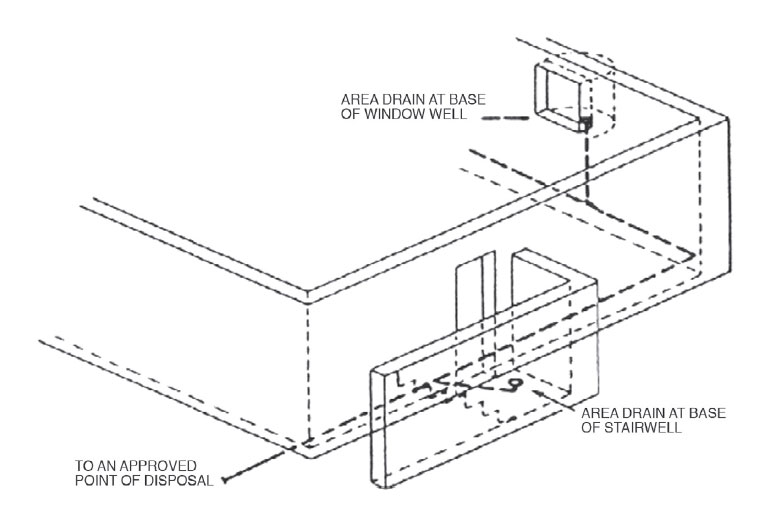
WINDOW AREAWAY DRAIN
From the 2024 UMC Illustrated Training Manual, Chapter 5, EXHAUST SYSTEMS
508.5.1 Canopy Size and Location. For canopy type commercial cooking hoods, the inside edge thereof shall overhang or extend a horizontal distance of not less than 6 inches (152 mm) beyond the edge of the cooking surface on open sides, and the vertical distance between the lip of the hood and the cooking surface shall not exceed 4 feet (1219 mm).
Use the edge of the cooking surface where appliances have an exposed cooking surface. Take into account the clearance required to the grease removal devices internal to the hood when determining the height of the hood. The lower lip of a canopy hood is not regulated as to its distance above the floor by this code.
Exception: Listed exhaust hoods are to be installed in accordance with the terms of their listings and the manufacturer’s installation instructions.
Listed hoods matched with specific equipment may lead to the exclusion of the 6-inch overhang or varying heights. However, the requirement to capture and remove cooking and grease laden vapors still exists. Normally, listed hoods just specify the maximum temperature range of the cooking equipment they protect. The overhang and vertical distance more typically fall within the same range as required for unlisted hoods.
(This is not to be considered the official position of IAPMO, nor is it an official interpretation of the Codes.)
IAPMO
IAPMO develops and publishes the Uniform Plumbing Code®,the most widely recognized code of practice used by the plumbing industry worldwide; Uniform Mechanical Code®; Uniform Swimming Pool, Spa and Hot Tub Code®; and Uniform Solar Energy, Hydronics and Geothermal Code™ — the only plumbing, mechanical, solar energy and swimming pool codes designated by ANSI as American National Standards — and the Water Efficiency Standard (WE-Stand)™. IAPMO works with government, contractors, labor force, and manufacturers to produce product standards, technical manuals, personnel certification/educational programs and additional resources in order to meet the ever-evolving demands of the industry in protecting public health and safety.
Last modified: March 5, 2026