
As drought conditions become increasingly common across parts of the Southeast, communities are being forced to rethink how they manage and use water. With growing populations and shifting climate patterns placing greater strain on municipal water supplies, the need for sustainable water efficiency measures has never been more pressing. Fortunately, a combination of advanced plumbing technologies, rainwater catchment systems, and greywater reuse solutions can help homes and businesses significantly reduce their dependence on potable water sources while ensuring long-term resilience.
Need for Efficiency
The Southeast has traditionally been known for its humid climate and abundant rainfall, but prolonged droughts are becoming more frequent and severe. Cities like Charlotte, North Carolina, and regions of northern Georgia have already experienced water restrictions and supply concerns, underscoring the importance of adopting smarter water-use strategies. By integrating waterefficient plumbing systems and implementing conservation measures, communities can better withstand dry spells while also reducing the financial burden of high water costs.
“There are so many areas of the United States that are facing increasing drought situations — and the Southeast is part of that — so we want to use our best efforts with proven water-efficiency technologies to try to lessen that load on the potable water demand,” IAPMO Executive Vice President of Industry Relations & Business Development John Watson said.
Rainwater Catchment
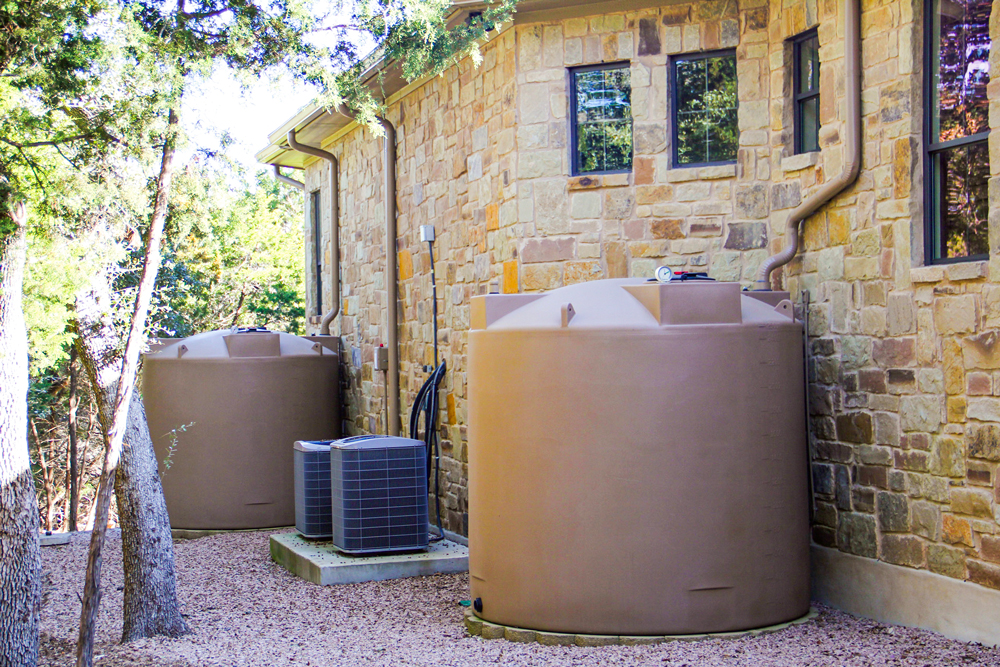
Large-capacity rainwater storage tanks installed alongside a residential structure capture roof runoff for non-potable uses, helping reduce stormwater runoff while providing an on-site water supply for irrigation and resilience. PHOTO COURTESY OF ARCSA INTERNATIONAL
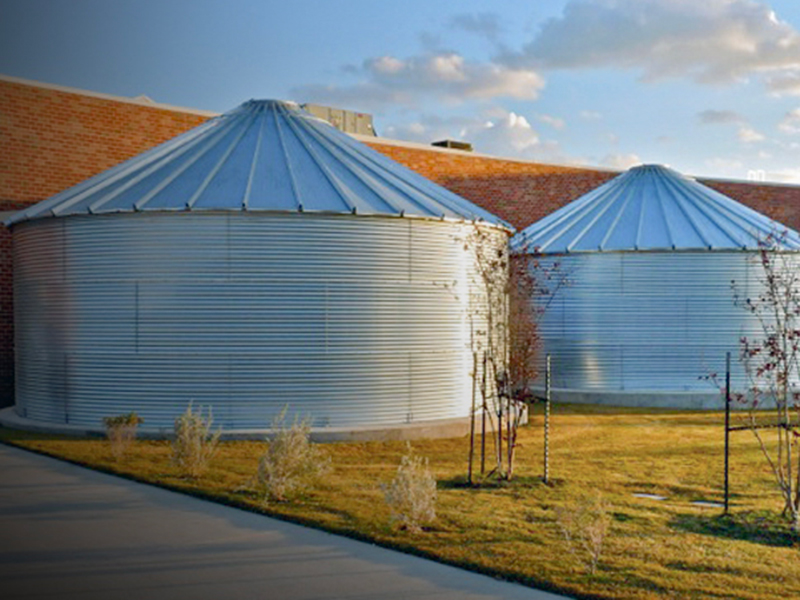
Rainwater harvesting systems offer a reliable way to supplement municipal water supplies, particularly in areas prone to drought. These systems collect and store rainwater from rooftops and other surfaces, making it available for non-potable uses such as landscape irrigation, toilet flushing, and even laundry. In some cases, filtered and treated rainwater can also be used for potable applications, reducing household demand on municipal supplies.
Standards such as ARCSA/IAPMO 63-2020: “Rainwater Catchment Systems” provide guidelines for the safe design, installation, and maintenance of rainwater harvesting systems, ensuring that they are effective and compliant with public health requirements. The adoption of these systems can help municipalities reduce demand on overburdened water infrastructure while providing homeowners with a resilient, decentralized source of water during drought conditions.
“Offsetting municipal water use can include providing irrigation water and other nonpotable water needs,” ARCSA International Executive Director Heather Kinkade said. “With purification, it can also help meet potable water demands. Rainwater harvesting systems can even be used for firefighting water supplies, supplementing or replacing municipal water in times of need. If there are water rations, irrigation needs can still be met through a rainwater harvesting system. When passive water collection methods are used — like capturing stormwater in rain gardens — plants may survive longer without added water or require less to thrive.”
Gray Water Reuse
In addition to rainwater harvesting, gray water reuse offers another opportunity to enhance water efficiency. Greywater — wastewater from sinks, showers, and washing machines —can be filtered and repurposed for irrigation or flushing toilets, reducing the need for potable water in non-drinking applications. This approach can significantly lower household water demand and provide an additional buffer against supply shortages.
IAPMO/ANSI Z1324: “Alternate Water Source Systems for Multi-Family, Residential, and Commercial Use,” establishes performance criteria for gray water and other reuse applications, ensuring these systems operate safely and efficiently. The widespread adoption of gray water systems can help reduce stress on municipal water supplies while promoting sustainability in new and existing developments.
Right-sizing Systems
Water efficiency isn’t just about using less — it’s also about designing smarter. Many existing plumbing systems are oversized, leading to excessive material use and water waste. Tools such as the IAPMO Water Demand Calculator® help communities in areas like Charlotte and northern Georgia adopt rightsized plumbing designs, reducing both construction costs and long-term water use.
In fact, the Metropolitan North Georgia Water Planning District — which includes the Metro Atlanta region— adopted the Water Demand Calculator as an “acceptable design method” from the IAPMO/ANSI 2020 “Water Efficiency and Sanitation Standard for the Built Environment” (WE•Stand), “which accounts for the demands of waterconserving plumbing fixtures, fixture fittings, and appliances.” If future versions of the Water Demand Calculator should be amended to include other building types, such as commercial, the updated versions shall be considered an acceptable design method.
The Water Demand Calculator addresses water quality issues attributed to lower flows in oversized premise plumbing while simultaneously using less water and energy, representing the most impactful innovation in pipe sizing in nearly a century. It is the result of a multiyear effort to develop a new statistically based pipe sizing method stemming from a need to address profound water safety and wasted water and energy concerns resulting from oversized water supply pipes in homes and buildings.
Saving Water Makes Sense
A simple but effective way to improve water efficiency is by using products that have received a WaterSense® label from the U.S. Environmental Protection Agency (EPA). Products and services bearing a WaterSense label are certified to use at least 20% less water, save energy, and perform as well as or better than regular models. These products include high-efficiency toilets, showerheads, and faucets.
Reverse osmosis (RO) systems, which reduce contaminants from the water supplied to a particular fixture, are a popular way to improve water quality and purity. However, as a typical point-of-use RO system generates anywhere from 4 to 5 gallons of reject water for every gallon of treated water produced, the desire to make such systems more efficient has gained momentum.
In November, the EPA released the “WaterSense Specification for Point-of-Use Reverse Osmosis Systems,” which requires systems to be at least 30% efficient to earn the label. A point-of-use RO system bearing the WaterSense label will send 2.3 gallons or fewer down the drain for every gallon of treated water it produces. Consumers installing a WaterSense-labeled model will reduce water use by an average of 3,100 gallons per year compared to a typical system, a savings of 47,000 gallons over the life of the system.
“The intention is to increase that as the program gains traction, as manufacturers can produce products that can exceed that 30%, but the intention was to start somewhere,” IAPMO Senior Vice President of Water Systems Tina Donda said. “So 30% efficiency is where they have set that level right now.”
Donda said the value of communities using water-efficient products when rebuilding comes in their efforts to be part of an overall solution.
“Water efficiency is not only related to you and what you use,” she said, “so the more water you save, the more water is available for everybody else around you. I think that water efficiency is a responsibility of everyone, and it’s not going to happen by one municipality, or by one homeowner. As rebuilding happens, more people getting on board puts us into a position to be in a better place overall with water scarcity issues in general.”
Water-energy Nexus
Transporting and treating water requires substantial energy. As IAPMO Vice President of Strategic Initiatives Christoph Lohr — who frequently writes and speaks about the “water-energy nexus” — penned in a 2023 article, “Water and energy are intertwined. Civilizations typically need two foundational things to thrive: Water/sanitation and cheap and reliable energy delivery. Water plays an integral role in the development of energy, but water use is also a large consumer of energy.”
When communities use water more efficiently, they lessen the strain on municipal treatment plants, cutting both energy costs and greenhouse gas emissions. Water conservation efforts do more than just reduce consumption — they also lower energy use and decrease carbon emissions. Heating water accounts for a significant portion of household energy consumption, and by using less hot water, households can cut energy bills while reducing their environmental footprint.
Developed by IAPMO, the aforementioned WE•Stand offers a comprehensive framework for improving water and energy efficiency in buildings, ensuring that conservation measures align with modern sustainability goals.
Enabling Smarter Codes
Policymakers can play a critical role in supporting plumbers and builders by advancing effective codes and standards that promote water efficiency.
IAPMO Senior Director of Government Relations Christina Kaeini said it is important to adopt modern plumbing codes that ensure buildings are equipped with water-efficient fixtures. This could also include leak detection systems and harnessing on-site water reuse as part of an effort to seek alternative water sources and reduce the reliance on traditional water sources.
“In this day and age, water efficiency is no longer an option; it’s something we need to do to protect our water going forward into the future, and as we think about on-site water reuse, it doesn’t make a lot of sense for us to continue to be using potable water for non-potable applications,” she said. Kaeini said because lawmakers often do not have backgrounds in the trades, it is vital for them to involve industry professionals in adopting codes and standards.
“They don’t have as much visibility into this sector and this industry, so the burden really is on them to have a very inclusive stakeholder process, some fact finding from the industry and say, ‘What’s best for you and how can I help you get there?’ I think that ties into long-term planning and resiliency and creating the most sustainable communities that we can.”
Kaeini said a key way policymakers can ensure plumbing codes keep pace with emerging technologies — like rainwater catchment and gray water reuse — is by placing them in regulations rather than statutes. While laws reflect the most upto- date, technologically advanced code or standard when passed, they can quickly become outdated. And because passing legislation can take years and multiple sessions, those laws can lag behind innovation.
Conversely, she said, if a regulator is emboldened by the legislature to manage plumbing standards through rulemaking, they can update them much more easily. “The second that standard becomes updated, we can just go to the agency, they can open a rulemaking, whether it be a 30-day, 90-day notice, and boom — it’s out there. They have the power and authority to update that regulation.”
Securing Our Water Future
Water efficiency in the Southeast is no longer just a response to drought — it’s a critical strategy for creating more resilient, cost-effective, and sustainable communities. With proven technologies, modern standards, and smarter design tools available, the region is well-positioned to implement lasting solutions that reduce strain on water and energy systems. By aligning innovation with policy and encouraging collaboration across industries, Southeast communities can move beyond short-term fixes and build infrastructure that’s prepared for the demands of the future.

Mike Flenniken is a staff writer, Marketing and Communications, for IAPMO. Prior to joining IAPMO in 2010, Flenniken worked in public relations for a group of Southern California hospitals and as a journalist in writing and editing capacities for various Southern California daily newspapers.
Last modified: February 19, 2026