

Currently, 58 Ontario Canada First Nation communities are under short or long-term drinking water (“do not drink” or “boil water”) advisories. Many of these orders have been in place for more than 30 years. Can you imagine being told not to drink your water because it is not safe? In Canada, in 2025? And Canada is in the top three globally for freshwater resources as well as per capita access. Sadly, lack of safe drinking water access inordinately affects many Indigenous communities.
United Nations Declaration on the Rights of Indigenous Peoples (UNDRIP), adopted in 2007 by the UN General Assembly, recognized individual and collective rights: to sanitation (Article 21); to physical and mental health (Article 24.2) and their spiritual connection to “waters” (Article 25), which surely includes safe drinking water. All are enshrined in UNDRIP.
Yet lack of access persists, and that directly impacts individual and community health. This is precisely why IWSH came into existence 10 years ago. Access to safe drinking water and adequate sanitation are basic human rights. They are not amenities for the few, the privileged, or the wealthy. IWSH works with communities to equitably address these issues.
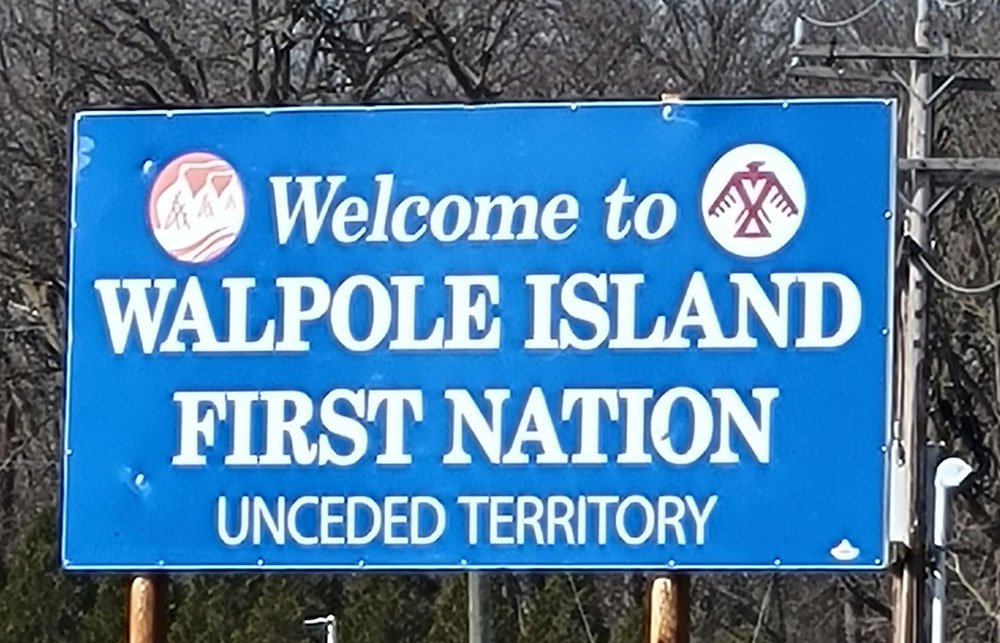
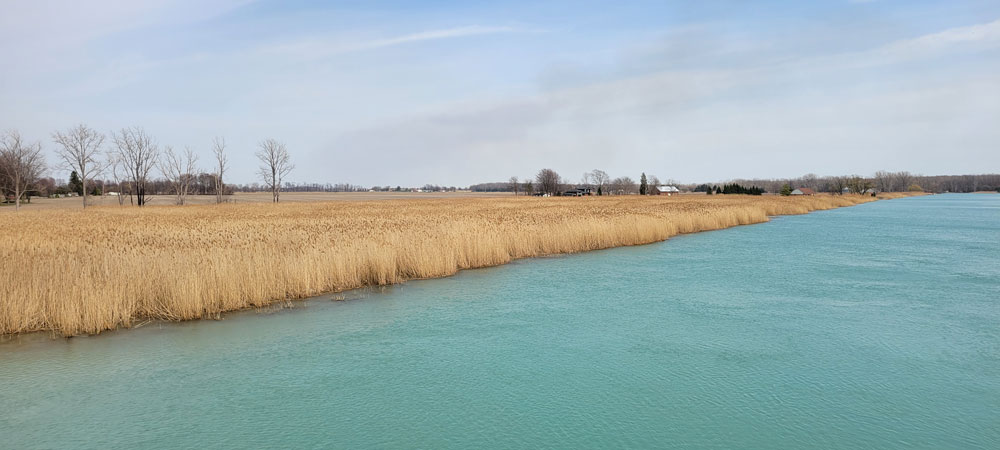
Bkejwanong (where the waters divide) Territory (Walpole Island) is unceded land. It is situated on the border of Ontario, Canada, and Michigan. Walpole Island has a water treatment plant that produces high quality, potable water. It is, however, over capacity, struggling desperately with upkeep of its dated infrastructure. Further complicating things, this is an ecologically sensitive region. It does not have a municipal sewage treatment facility, and conventional septic systems rarely work.
Working with First Nations to tackle water and sanitation access has been a dream of mine for decades. Doing so is incredibly difficult because it involves dismantling literally centuries of distrust, broken treaties and empty promises. Why should an indigenous community believe any outside entity would deliver potable water or sanitation? Hundreds of years of evidence demonstrates the contrary — nobody really cares enough to do something about it.
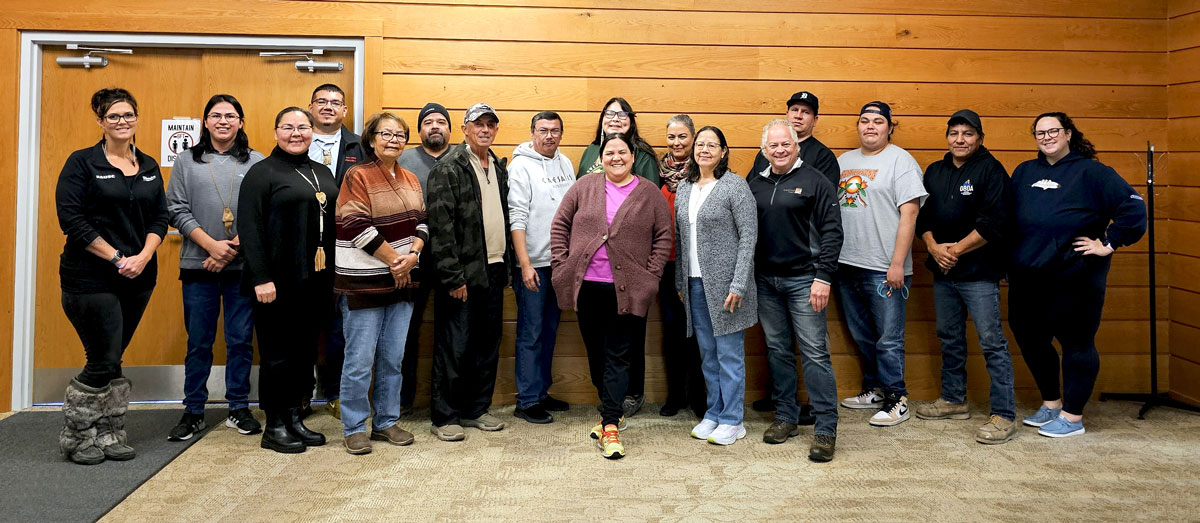
Relationship building is foundational to all IWSH Community Plumbing Challenge (CPC) projects. In the context of First Nations, this often takes years, as it did with Walpole Island.
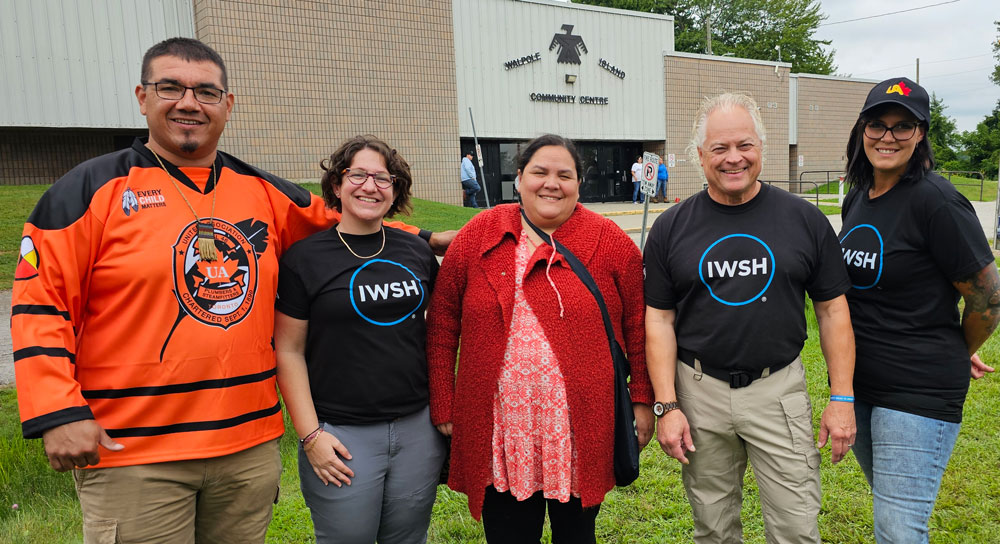
The first step to a successful CPC is identifying, scoping and planning a project. To do this we needed contacts and an invitation. Enter our friend Danny Deleary. A Walpole community resident, Danny is manager of Special Projects for Indigenous Skills, Employment, Apprenticeship and Development (ISEAD). His connections were instrumental in arranging preliminary meetings with Walpole Island First Nation Chief and various staff.
Another essential ingredient is strong industry partnerships. Enter Alanna Marklund, Youth, Diversity and Indigenous Relations special representative with UA Canada. For years UA Canada sought to make a difference in First Nations communities using pipe trades skills, however, made little headway until connecting with IWSH. Alanna opened countless doors to the pipe trades industry in Ontario. She single-handedly leveraged numerous financial and in-kind donations to our CPC. While this is so necessary, perhaps her greatest contribution is her character and passion. Alanna, herself a top-notch welder, tirelessly works to ensure others too might have an opportunity to find fulfillment in a pipe trades career.
Early in 2023, we had a virtual meeting including Danny and Alanna when we met Walpole Chief. This led to a first trip to Walpole, spring of 2023. There Alanna and I met Danny, who gave us a tour of Bkejwanong’s complex network of islands and waterways. The water was a mesmerizing azure blue. Teeming with life, Bkejwanong is on the central flyway of migratory waterfowl and birds. The land’s highest point is a mere 2m (roughly 6 feet) above the water level.
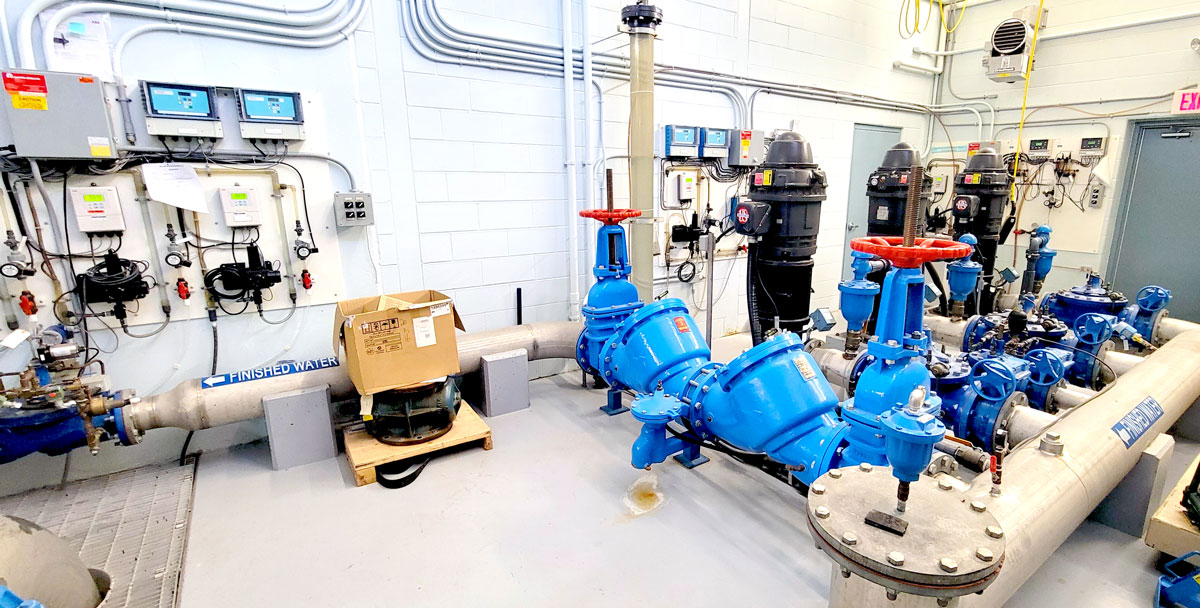
Inside the water treatment plant at Walpole Island. PHOTO BYJED SCHEUERMANN
The Walpole headquarters building is new and state of the art. Many other structures are older, clearly showing need for a major overhaul. Housing quality varied considerably, from very obviously challenged to quite adequate. We visited the water treatment facility. Though it produces fine quality water, it struggles with outdated equipment. Replacement parts are increasingly difficult to obtain or are even obsolete. Dedicated staff are noticeably stressed under the weight of keeping their old plant functioning at a high level.
Walpole’s administrative and workforce building was originally a small shop structure, designed to accommodate about 12 occupants. Over years and a few additions, it currently has up to 60 people using it daily. Now overloaded, its septic system is failing, resulting in frequent backups and inability to use interior plumbing reliably. Similarly, community centre plumbing became more complicated after another building was added to its septic system.
Getting a firsthand look at Walpole’s plumbing realities was eye opening. These inadequacies did not happen overnight, rather they were evidence of countless broken promises and systematic failures. Danny arranged for Alanna and I to meet in-person with Walpole’s Chief, in his office. He was interested to hear our reaction to what we saw. In a very candid conversation, I compared what we’d experienced with the situation on the Navajo Reservation. He was very intrigued by our approach and successes there. It was the launch point from which we explored what possibilities might exist for collaboration between Walpole Island First Nation, IWSH and UA Canada.
Mobilizing the plumbing industry’s expertise is foundational to IWSH. Walpole’s situation called for this — precisely what IWSH does! In past CPC efforts, a Household Plumbing Survey was used to determine the status of the entire plumbing system in residential applications. Turning our focus to addressing plumbing needs in community spaces (non-residential occupancies) we modified our survey accordingly. In 2024, Robyn Fischer and I utilized this Non-Residential Plumbing Survey to carefully identify, document, and photograph specific needs in the Administrative Building as well as the Community Centre.
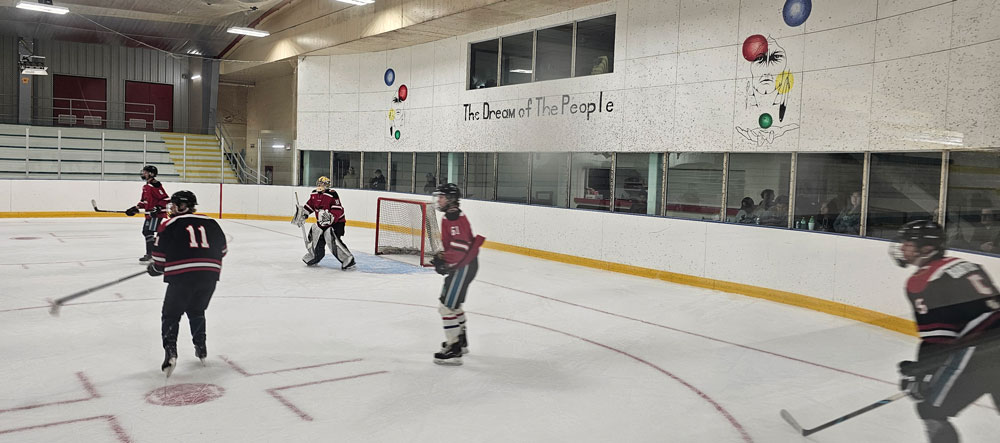
Our findings gave us a concept for a few CPC projects that would help improve Community Centre plumbing. This center is the heart and soul of Walpole. It is the community’s hockey and lacrosse arena. Hockey is central to Canadian culture, as lacrosse is to many Indigenous peoples. Here graduations, funeral wakes, and cultural education take place. It provides shelter to the unhoused during long, cold Canadian winters. As such, every Walpole resident is often at the center and would benefit from any upgrades done there. The center is approximately 40 years old; however, no improvements to its plumbing system have been made since construction.
Fixtures use a large volume of water for operation. The goal of our CPC was to replace identified fixtures with new, high-efficiency models. This approach provided a two-fold benefit. First, water consumption would be reduced to a small fraction of previous demand. In effect it extends the capacity of their water treatment facility. Second, using radically less water meant producing less sewage, thereby easing the burden on the septic system; a truly win-win proposition. In November 2024, Alanna and I made another trip to Walpole Island. We made a presentation to Chief and Council of a potential four-phase CPC, seeking approval for only the first phase. Phase One, Community Centre involved:
- Replace 22 toilets complete with flushometers
- Replace 5 urinals, complete with flushometers
- Replace 18 lavatory faucets
- Replace 5 chipped/glazed lavatories
- Repair and upgrade 12 showers
- Replace DWV and water piping in two washrooms
There was palpable excitement in the chamber; the Council was ready to approve our CPC proposal immediately. An official vote had to be deferred until proper public notification with inclusion of this as an agenda item was given. That occurred early 2025, when Chief Leela Thomas and the Council acted to formally approve Phase One of our CPC. The CPC would take place in August, after lacrosse season ended, before hockey training camp started. The sheer scope of our CPC was huge; this would be a mammoth undertaking.
Central to IWSH’s approach is a simple success equation: Well-planned project + skilled trades + quality product + community training = scalable, measurable change
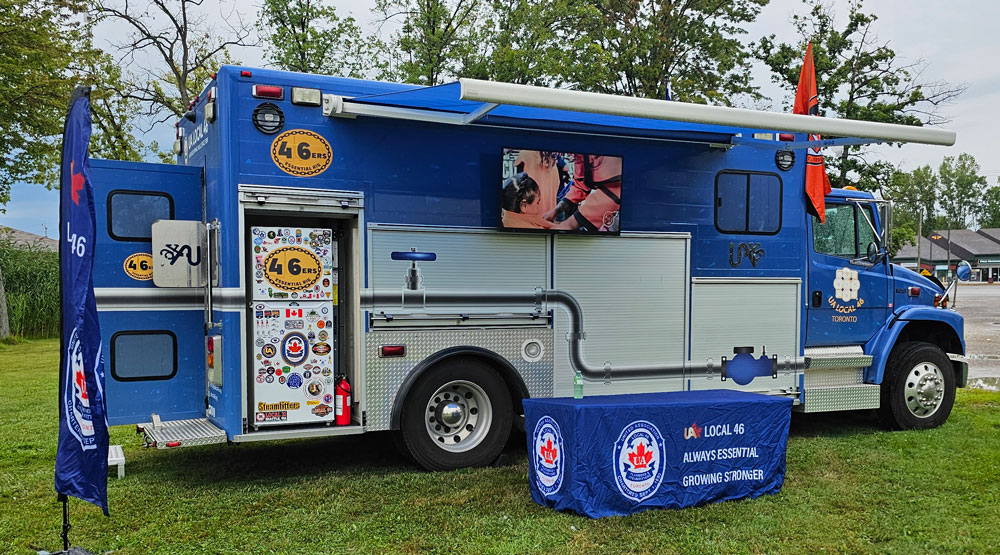
Planning started as soon as the Council green-lit the CPC. Given the political climate between the United States and Canada, it became instantly apparent all materials would have to be sourced in Canada. Jason Pfeffer, business manager of UA Local 527 (Southwestern Ontario), creatively arranged for a donation of top quality, latest highefficiency toilets, urinals and flushometers. He also ensured most incidental parts, connectors, and other necessary pieces were donated. He also sent several plumbers to join our team. Kayle McDonald, business manager of UA Local 663 (Sarnia), recruited apprentices and contractors to join our team. The local stored our fixtures and materials until the CPC started. Kayle also empowered his leadership team to join us for the CPC. Dave Griffiths, business manager, UA Local 46 (Toronto), recruited several plumbers for our team. His local also provided a mobile kitchen and barbeque unit, manned by a couple members. They provided tasty breakfast and lunch not only for the CPC team, but also for community members who came to check out what was going on in their community centre.
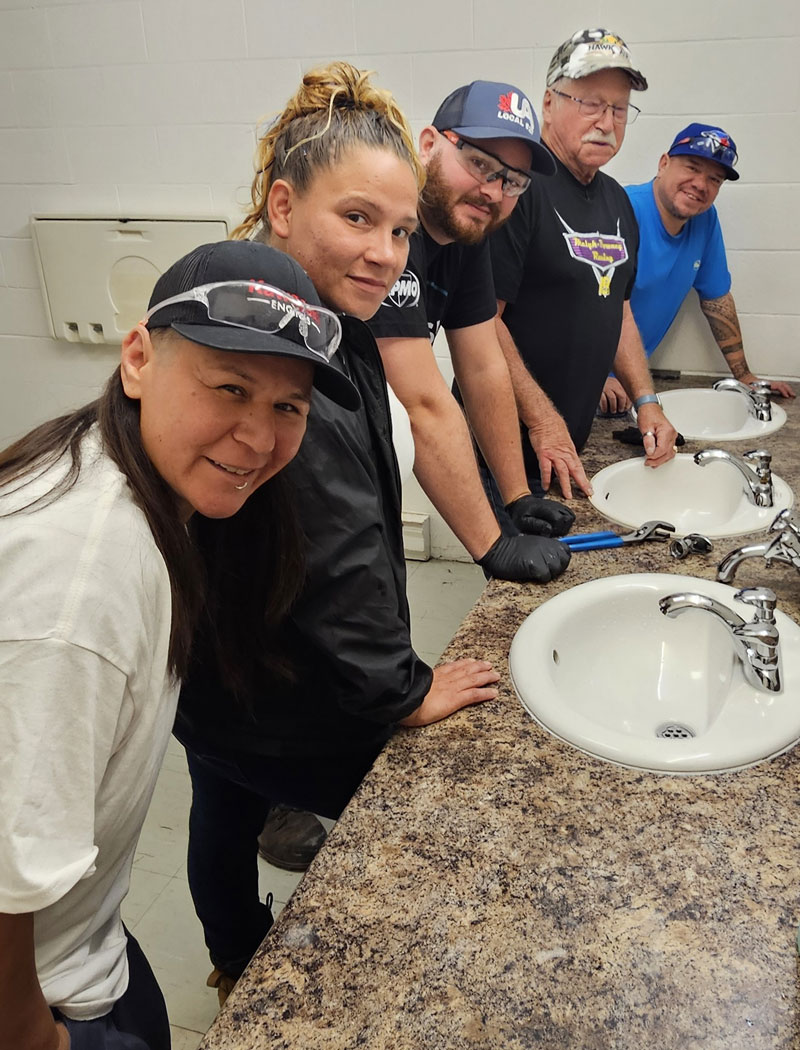
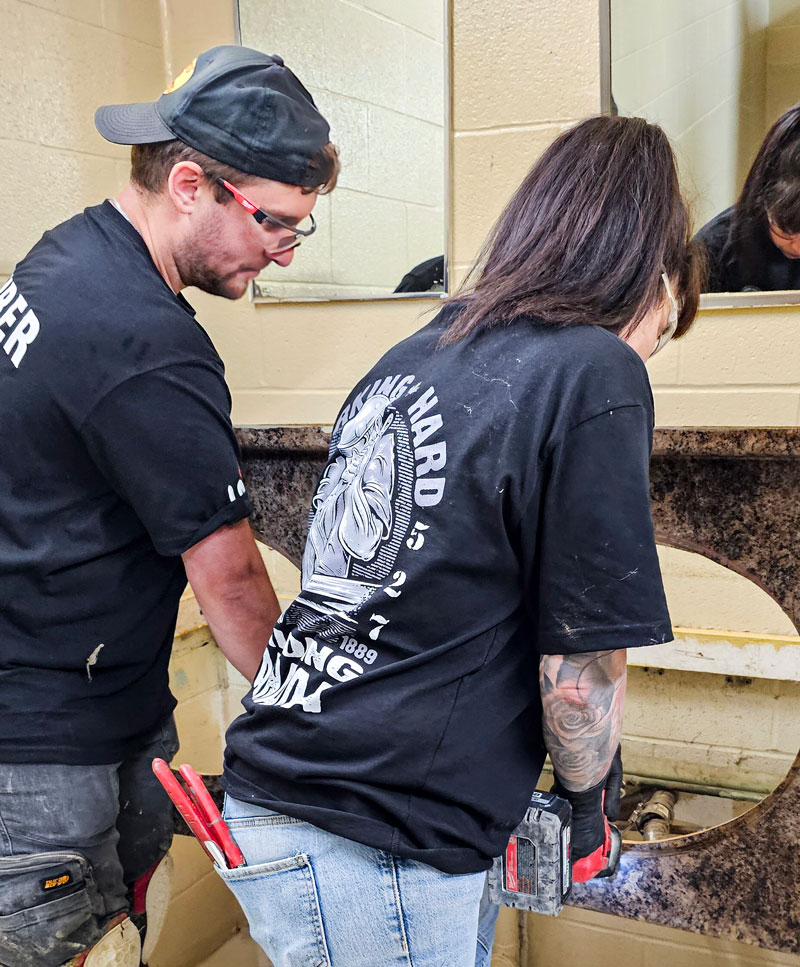
Licensed plumbers’ skills were on full display. Every IWSH CPC utilizes only licensed and eminently qualified tradespersons. Plumbing, namely safe drinking water and proper sanitation, demands this. These are matters of public health, life and death as are captured in the timeless motto of our trade: “The plumber protects the health of the nation.” A CPC is not the DIY domain of the weekend warrior. Too often, indigenous communities are subjected to inferior work done by unqualified individuals or organisations, as somehow that is acceptable. NEVER on an IWSH CPC!
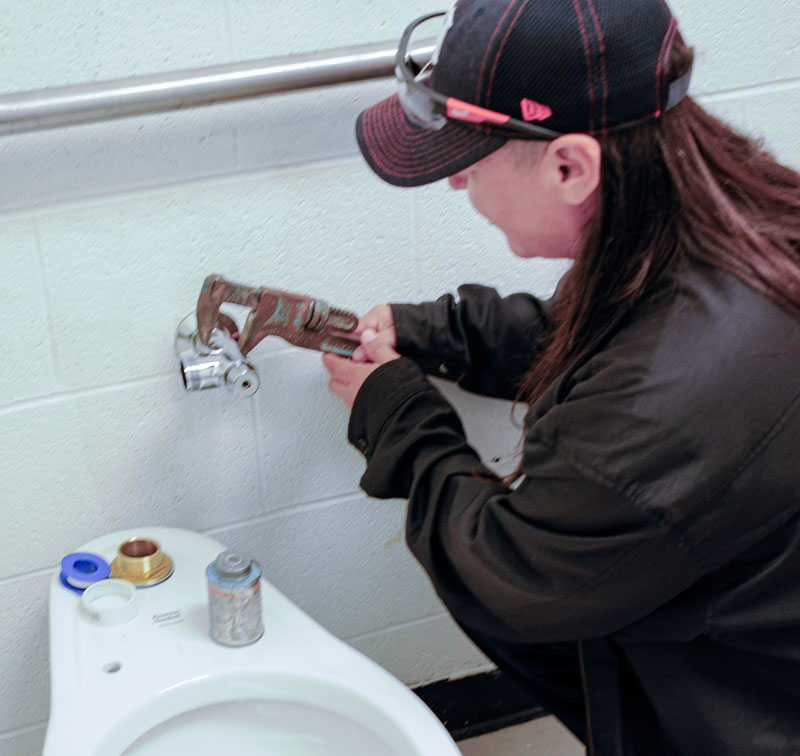
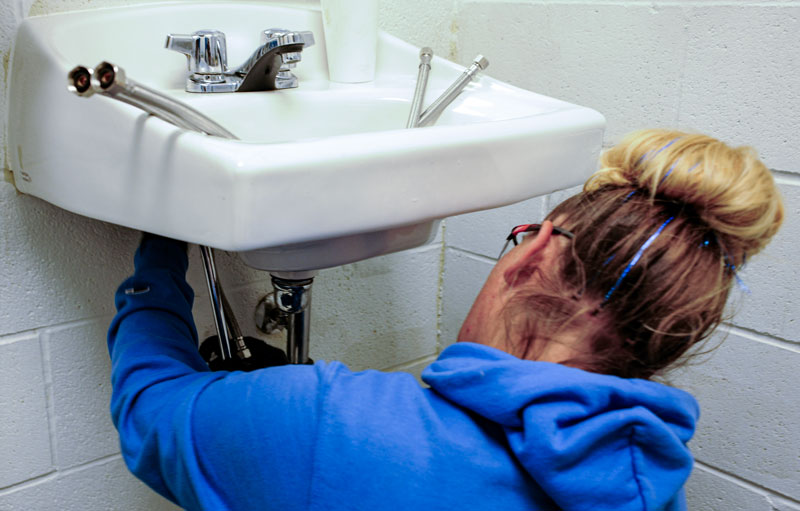
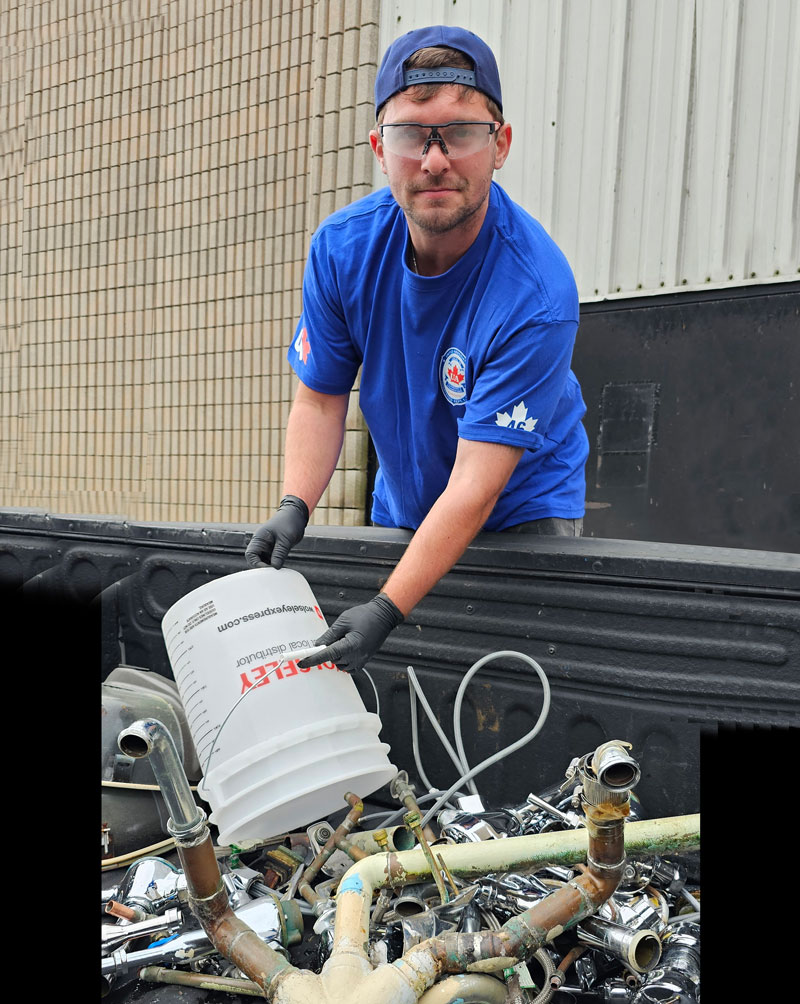
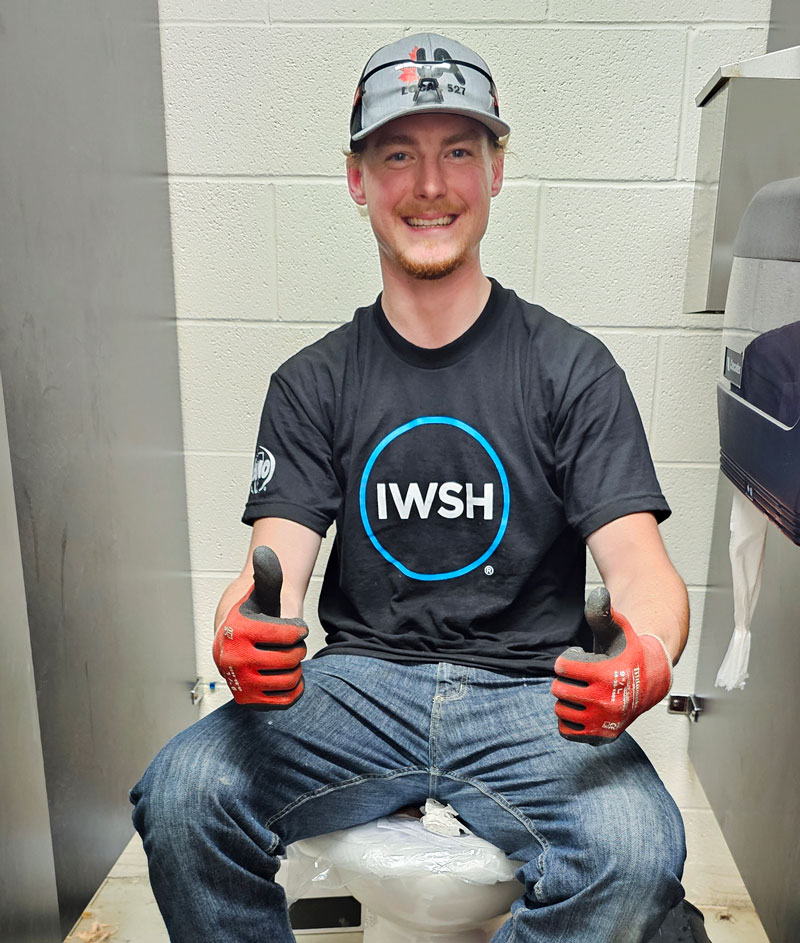
Weeks before our CPC launched, Ian Harper, ISEAD Board member, seasoned plumber, retired member of UA Local 67, spent two weeks at Walpole. Why? He provided vital job safety along with “Plumbing 101” training to eight Walpole Island youth. This initiative was organized by Val Vanderwyk, ISEAD executive director, with support from Skills Council of Canada. These sessions were a prerequisite for job-shadowing plumbers during the CPC week. Five youth joined us that week, watching plumbers in action making all the plumbing upgrades. Our strategy involved having them observe and work alongside as many different tasks as possible. Each day we saw bright, smiling faces, experiencing first-hand how to install toilets, urinals, flushometers, make shower improvements, and how sub-standard drain, waste, and vent (DWV) and water piping were upgraded. They got “hands on” often, receiving watchful guidance of professional plumbers.
Without doubt this CPC resulted in significant, quantifiable change. Water consumption for toilets went from 3.5GPF down to 1.28GPF. 1GPF urinals were reduced to 0.5GPF. New metering lavatory faucets used only 0.25 gallons per operation cycle. 2.5GPM shower heads were outfitted with new 1.5GPM units. Multiplied over the number of fixtures, coupled with high usage during sporting or community events, this translates to a massive saving of water. It simultaneously eases the burden on their overtaxed septic system.
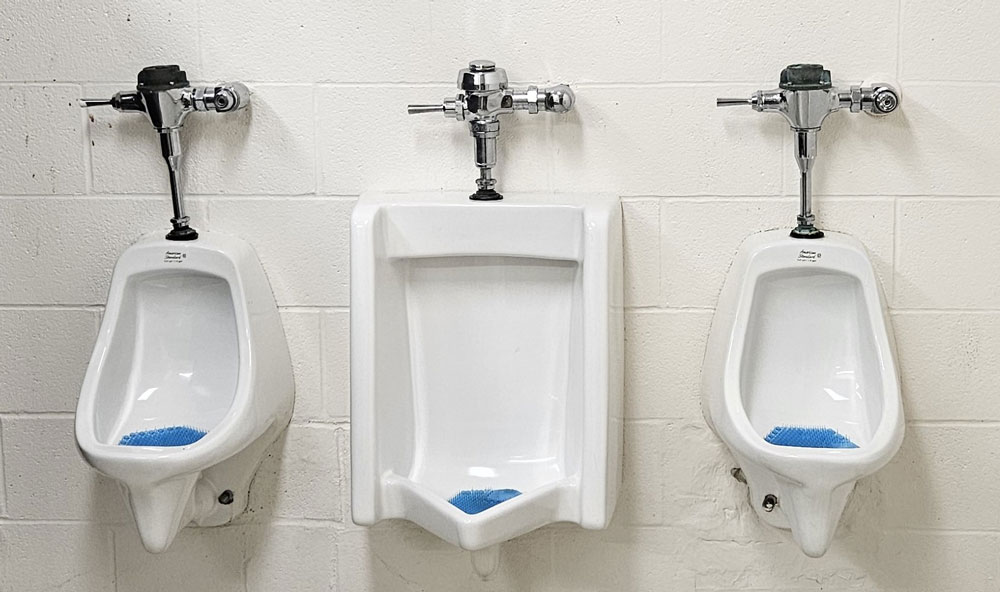
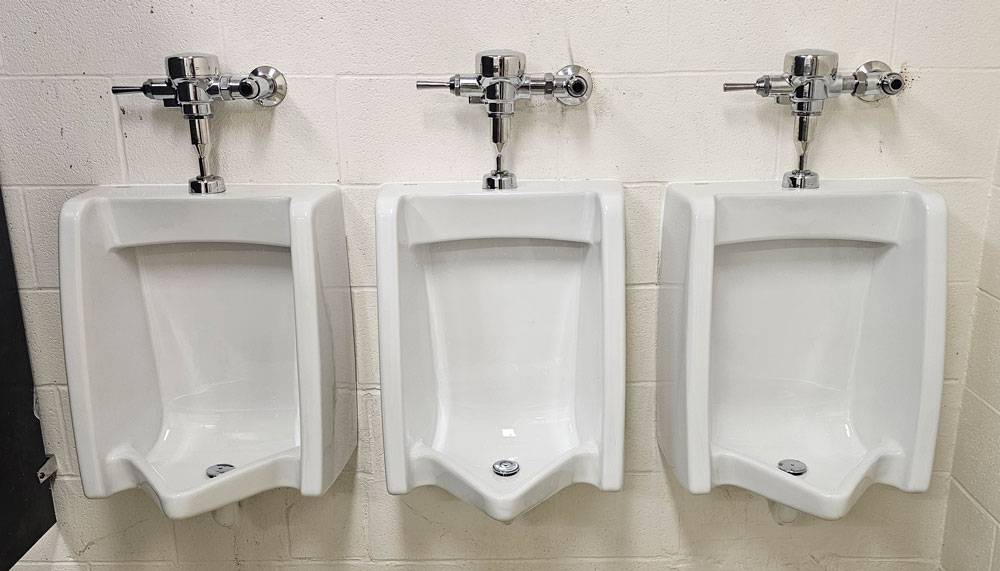
Over the course of our CPC, the impact it had on so many individuals was clearly evident. Walpole youth were introduced to our trade. They learned first-hand what a plumber does by coming alongside tradespeople who loved what they did. Some of them are now considering taking up plumbing as their chosen career path. The community learned that beyond their borders many plumbers genuinely care about them and are willing to sacrifice to make life at Walpole better. Volunteers perhaps saw how their plumbing skills change lives, even though they long understood how their craft provides a very good living.
A CPC is human first — those who receive, as well as those who give — and project second. No humanitarian organization should ever lose sight of this. Of course, a successful project is always the goal, however, it should never come at the expense of people. Every person deserves a first-rate solution to whatever situation is their reality. I am proud that IAPMO launched IWSH, showing that action speaks louder than words.
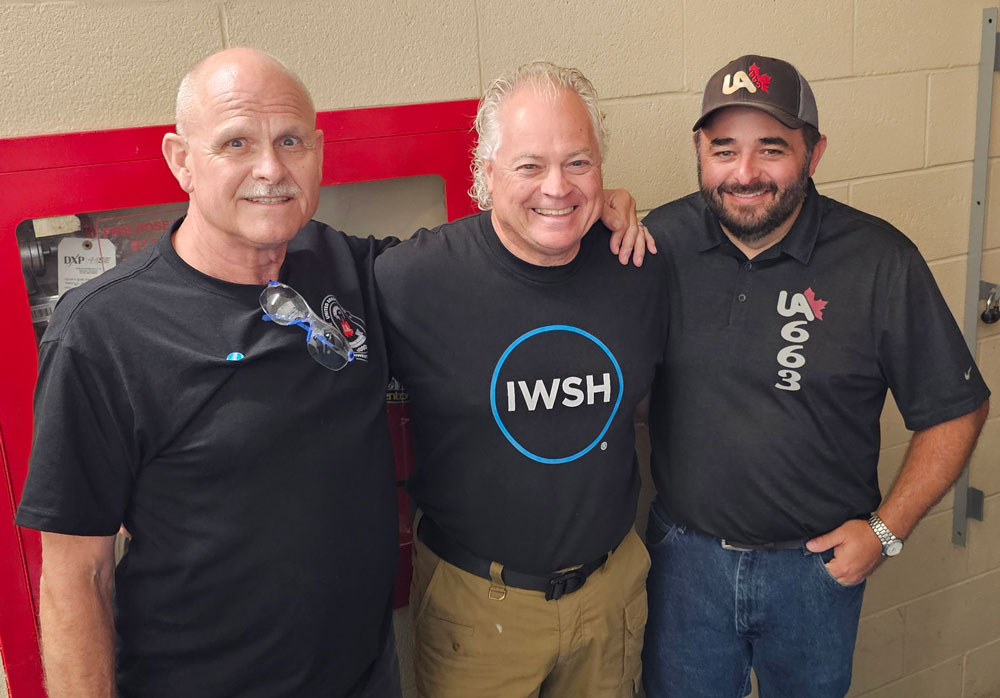
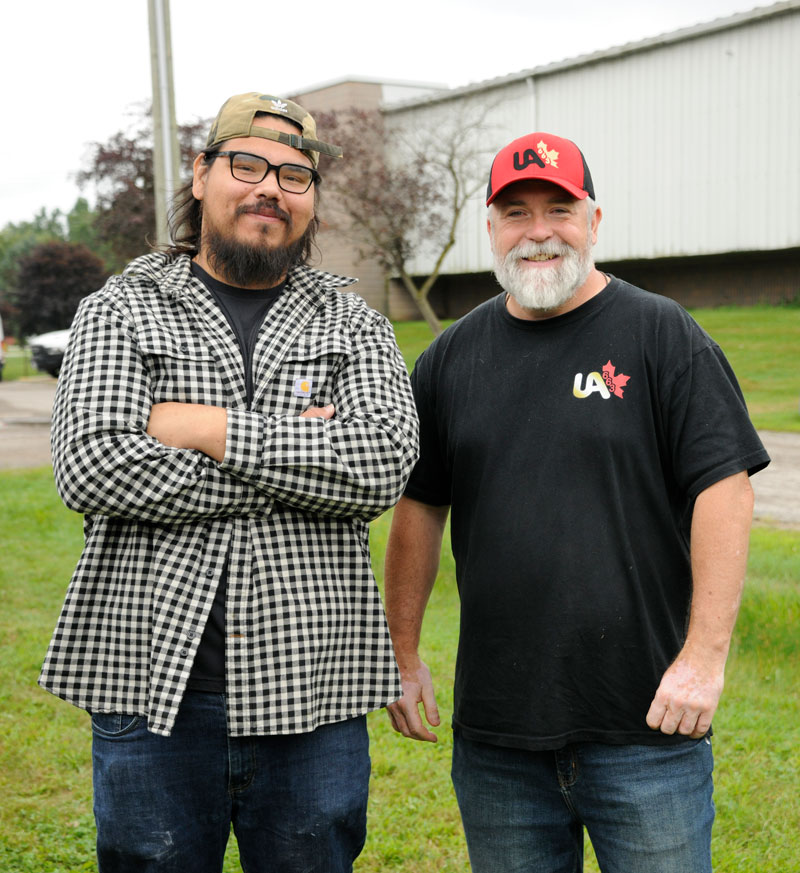
When I first embarked on my plumbing apprenticeship many years ago, I simply had no idea how much it could change life. Discovering the inequity endured by so many First Nations communities directly due to lack of clean drinking water and adequate sanitation haunted me. From there, it became my goal to one day meaningfully address those issues in Canada. Elevating the quality of plumbing at Walpole Island First Nation through CPC gives dignity to each community member. Plumbing is essential!
In 2008, Canada convened its Truth and Reconciliation Commission. It was tasked with investigating abuses sustained by Indigenous peoples. Over several years thousands of interviews were conducted of survivors of the Residential School System. The commission’s report outlined 94 “Calls for Action,” concrete steps for reconciliation. Sadly, many of the 94 are merely empty words with little discernable action. It is time for reconcili-ACTION! IWSH delivered tangible, positive action.
During an interview, Danny summed up our CPC week with power, eloquence and emotion. He noted, “…we are not looking for a handout, we are looking for a hand up.” His gratitude for what occurred in August was obvious. He went on to say, “As we look back on this, we will realize that what we’ve done this week is transformative change that will have an impact on future generations of this community.”
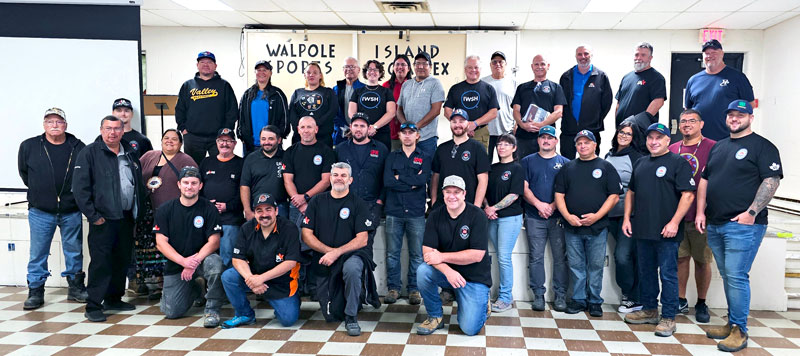
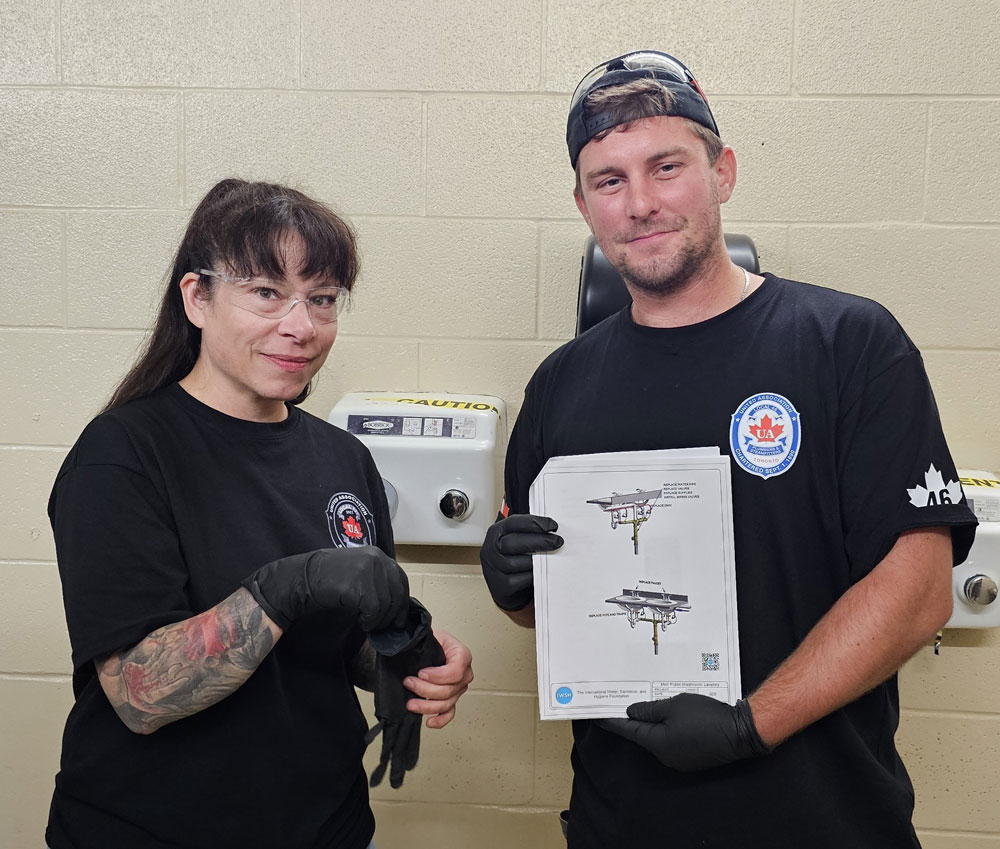
On the last night of our CPC, we all gathered in Walpole’s Community Centre for a feast, prepared by the community. All the volunteers, together with community members, shared a delicious meal, including traditional staples such as locally caught pickerel (walleye). The atmosphere was celebratory; several people expressed their feelings about the CPC, and IWSH challenge coins were presented to volunteers. Enduring friendships were established between diverse individuals. Seeing how so many people came together, rallying around such a noble cause was heartwarming.
I once heard a story about thousands of starfish at the ocean’s shore stranded above the surf line at low tide. An old man was there, throwing them one by one back into the ocean. A passerby happened along this scene. He looked on incredulously as the old man flung them. He remarked, “There are thousands of them, what difference are you making?” The old man calmly replied, “I am making a difference for this one…” and continued tossing starfish back into the sea. If I only look at the enormity of the task addressing First Nations water and sanitation problem, it would be discouraging. It is truly daunting. But that is the wrong perspective, I think. We made a difference at Walpole Island. Next year I hope to write another piece, continuing this story. One starfish, one CPC at a time, we change our world.

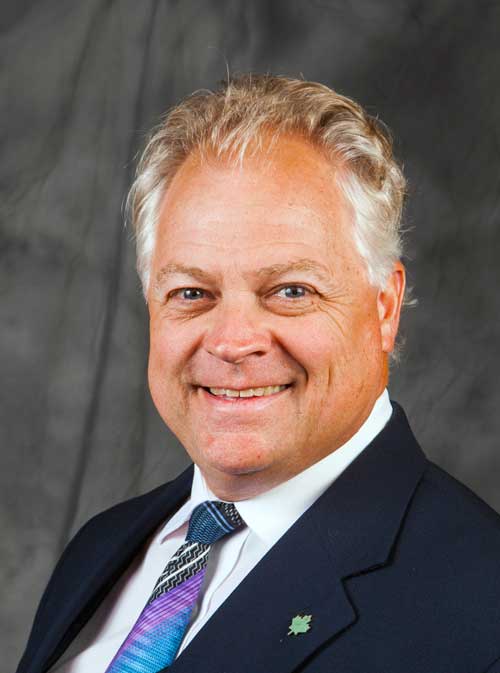
Jed Scheuermann
A Master Plumber, with over 40 years’ experience and has achieved a Bachelor (Education) degree and Instructor of Pipe Trades Certificate. As an educator, his passion is to effectively share trade knowledge, and he believes that access to safe drinking water and adequate sanitation are basic human rights that much of the world lacks.
In 1989 Scheuermann participated in his first humanitarian mission at an orphanage in Brazil. His experience there literally changed his life, setting his feet on a path that prompted numerous humanitarian and first responder to natural disasters trips. He has now traveled to nearly 40 countries in the process and is an avid writer & photographer having published many articles.
Last modified: February 19, 2026