February 12, 2026
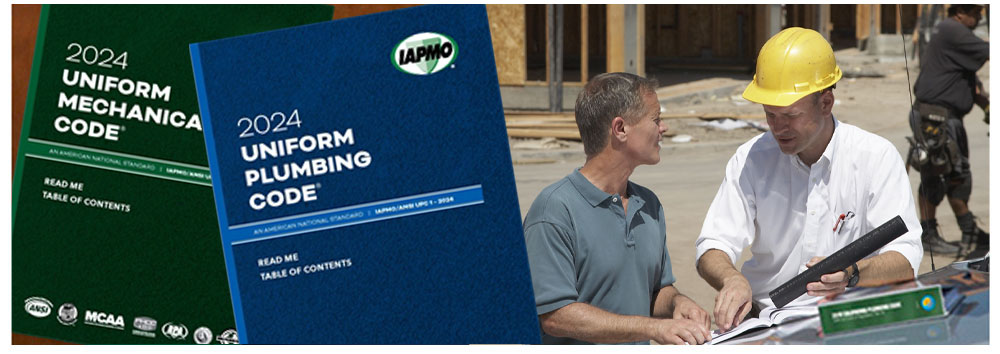
From the 2024 UPC Illustrated Training Manual, Chapter 9, VENTS
910.1 Where Permitted. Combination waste and vent systems shall be permitted where structural conditions preclude the installation of conventional systems as otherwise prescribed by this code.
The structural condition referenced in this section is where there is an absence or lack of vertical walls to install vent pipes. This plumbing system design begins with the concept of an appropriately sized horizontal pipe that serves a dual purpose as a drain and a vent where the wetted perimeter is low enough to allow adequate air movement in the upper portion of the pipe.
The drain and vent area ratio in the horizontal pipe is controlled by sizing traps and horizontal branches two pipe sizes larger than the fixtures tailpiece it serves as well as prohibiting high discharge fixtures such as toilets and urinals. For purposes of this section, half sizes are included when determining two pipe sizes larger.
From the 2024 UMC Illustrated Training Manual, Chapter 5, EXHAUST SYSTEMS
506.8 Fire Protection. Sprinklers or other fire-protection devices shall be installed within ducts having a crosssectional dimension exceeding 10 inches (254 mm) where the duct conveys flammable vapors or fumes. Sprinklers shall be installed at 12 foot (3658 mm) intervals in horizontal ducts and at changes in direction. In vertical runs, sprinklers shall be installed at the top and at alternate floor levels.
When ducts carrying flammable vapors or fumes have a cross-sectional dimension in excess of 10 inches, sprinklers or other fire sprinkler devices must be installed. In horizontal ducts, sprinklers must be installed at 12-foot intervals and at changes in direction. In vertical runs, sprinklers are required at the top and at alternate floor levels.
(This is not to be considered the official position of IAPMO, nor is it an official interpretation of the Codes.)
IAPMO
IAPMO develops and publishes the Uniform Plumbing Code®,the most widely recognized code of practice used by the plumbing industry worldwide; Uniform Mechanical Code®; Uniform Swimming Pool, Spa and Hot Tub Code®; and Uniform Solar Energy, Hydronics and Geothermal Code™ — the only plumbing, mechanical, solar energy and swimming pool codes designated by ANSI as American National Standards — and the Water Efficiency Standard (WE-Stand)™. IAPMO works with government, contractors, labor force, and manufacturers to produce product standards, technical manuals, personnel certification/educational programs and additional resources in order to meet the ever-evolving demands of the industry in protecting public health and safety.
Last modified: February 12, 2026