January 15, 2026
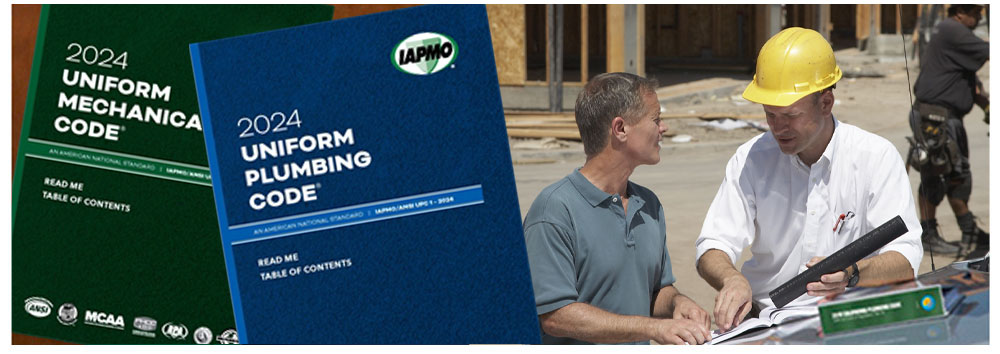
From the 2024 UPC Illustrated Training Manual, Chapter 5, WATER HEATERS
509.4.3 Special Gas Vents. Special gas vents shall be listed and labeled in accordance with UL 1738 and installed in accordance with the special gas vent manufacturer’s installation instructions. [NFPA 54:12.5.4]
All special gas vents are listed vent materials in accordance with UL 1738, Standard for Venting Systems for Gas-Burning Appliances, Categories II, III and IV. Installation instructions for special gas vents include limitations on operating temperature, categories of appliance to be used with each vent, clearance to combustible materials, types of fittings and joint sealant to be used and vent termination requirements.
Special attention should be given to the following areas:
- Proper support for the special vent to prevent sagging and to allow for expansion, contraction and condensate drainage.
- Proper cutting and cleaning of joints and fittings, and the use of recommended joint sealants (substitutes are not usually permitted).
- Construction of a condensate trap (see appliance manufacturer’s instruction for special requirements).
- Wall penetrations (the pipe should not be secured at a thimble, as the pipe must be allowed to move to accommodate expansion and contraction).
- The vent pipe or the fittings of the inside of a wall thimble must not be insulated when polymeric (nonmetallic) vent materials are used.
From the 2024 UMC Illustrated Training Manual, Chapter 8, CHIMNEYS AND VENTS
802.12 Appliances Requiring Draft Hoods. Vented appliances shall be installed with draft hoods.
Exception: Dual oven-type combination ranges; direct vent appliances; fan-assisted combustion system appliances; appliances requiring chimney draft for operation; single-firebox boilers equipped with conversion burners with inputs greater than 400 000 Btu/h (117 kW); appliances equipped with blast, power, or pressure burners that are not listed for use with draft hoods; and appliances designed for forced venting. [NFPA 54:12.13.1]
Draft hoods on vent systems perform the following three functions:
- The negative pressure in the vent system created by the hot exhaust gases draws in dilution air at the draft hood opening. This dilution air is taken from the room in which the draft hood is located. This room air is much cooler than the exhaust gases, thereby lowering the net stack temperature and reducing fire hazards. Dilution air is also much drier than the exhaust gases, thereby raising the dew point and reducing any condensation.
- The draft hood acts as a break between the vent system and the appliance and eliminates stack action. Appliance manufacturers design their equipment to operate with a specific range of airflow through the appliance. If there were no separation between the appliance and the vent system, excessive drafts created by tall chimneys would affect the combustion process and flame stability, possibly even a pilot outage. Excessive drafts would also lower efficiency by moving the products of combustion through the heat exchanger before optimal heat transfer. Wind effects can also create temporary downdrafts.
- Finally, a draft hood provides a relief opening in the event of a downdraft. Vent systems may temporarily experience poor venting at startup (before the vent heats up) or during windy conditions. Under these conditions, some of the products of combustion may spill out at the draft hood. The principal products of combustion from a properly burning appliance are carbon dioxide and water vapor and should cause no immediate harm. Once draft is established (or reestablished when the wind subsides), all of the combustion products are vented safely up the vent. During a sustained downdraft, such as a blockage, all of the combustion products may spill into the living space and may eventually displace the oxygen in the room. This will potentially lead to incomplete combustion and the formation of carbon monoxide. New central heating appliances equipped with draft hoods must have safety switches, such as the spill switches, which will shut off the burner in the event of a sustained downdraft.
Draft hoods are an integral part of the equipment design and should never be altered. The height of the draft hood above the flue collar will affect combustion and the airflow through the appliance. If a draft hood were removed entirely, even a temporary downdraft would immediately affect the combustion process, potentially creating carbon monoxide.
Barometric draft regulators perform the same functions as a draft hood, but are generally used in connections with power burners and conversion burners. Where power burners are used, the gas input, combustion air, flame pattern and draft all must be carefully set to match the equipment they serve.
Barometric draft regulators are usually adjustable so that the amount of draft can be set for maximum efficiency and safe burner operation. Barometric draft regulators, when used with gas appliances, are double-acting so that they will act as a relief opening in the event of a downdraft. Safety shutoff devices are required on all conversion burners installed after 1990.
(This is not to be considered the official position of IAPMO, nor is it an official interpretation of the Codes.)
IAPMO
IAPMO develops and publishes the Uniform Plumbing Code®,the most widely recognized code of practice used by the plumbing industry worldwide; Uniform Mechanical Code®; Uniform Swimming Pool, Spa and Hot Tub Code®; and Uniform Solar Energy, Hydronics and Geothermal Code™ — the only plumbing, mechanical, solar energy and swimming pool codes designated by ANSI as American National Standards — and the Water Efficiency Standard (WE-Stand)™. IAPMO works with government, contractors, labor force, and manufacturers to produce product standards, technical manuals, personnel certification/educational programs and additional resources in order to meet the ever-evolving demands of the industry in protecting public health and safety.
Last modified: January 16, 2026